
 685 738 325
Feline Medicine
Signs your cat is sick and when to go to the vet
30 June 2026 · Updated on 24 August 2026

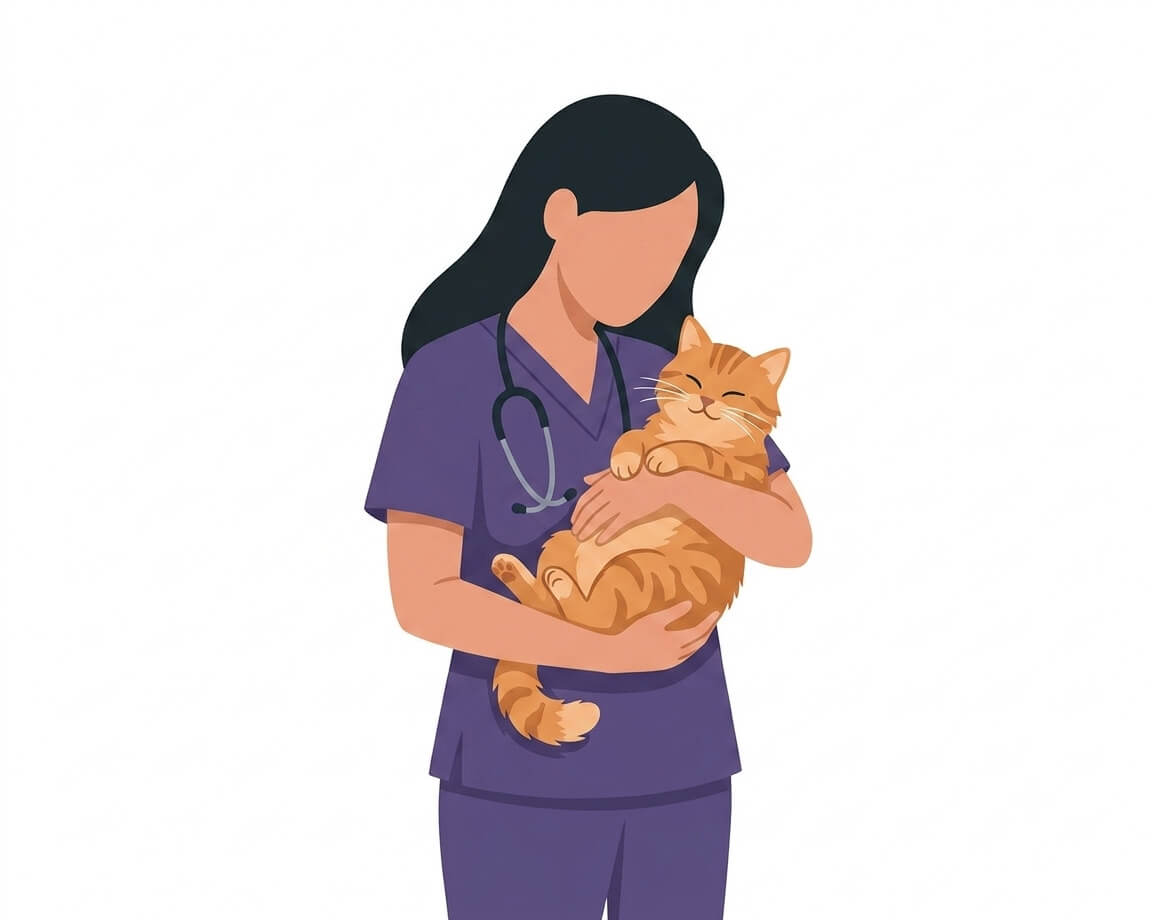
There’s something cat owners tend to learn sooner or later, often the hard way: cats are experts at hiding illness. It’s not stubbornness or a personality trait. It’s biology. And understanding that changes everything about how you observe your cat day to day.
Unlike a dog, which usually shows discomfort quite openly — losing energy, going off food, whimpering — a cat in pain or ill can carry on appearing perfectly normal for days or weeks. By the time symptoms become visible, the illness has often been developing for some time. That’s why learning to recognise the signs your cat is sick — the subtle ones, the ones that appear before anything is obvious — isn’t optional. It’s part of caring for them properly.
This article helps you identify those signs, distinguish what needs immediate attention from what can wait a few days, and understand why cats require a different kind of veterinary follow-up than other pets.
Why cats hide pain (and what that means for you as an owner)
In the wild, showing weakness means becoming prey. The wild ancestors of the domestic cat depended on not appearing vulnerable to survive, and that instinct hasn’t disappeared over the thousands of years of living alongside humans. A sick cat follows the same imperative: conceal it.
What this means in practice is that cat owners need to sharpen their observation much more than dog owners do. Your cat is not going to come and warn you that something is wrong. The changes will be subtle — in behaviour, in routines, in small physical details — and noticing them requires knowing your cat well when they’re healthy. There’s no way to spot that something has changed if you don’t know what normal looks like.
Behavioural signs: the first changes to notice
Before any physical symptom appears, behaviour is usually the first signal that something isn’t right. Knowing your cat’s personality — their routines, their preferences, how they interact with you — is your best diagnostic tool.
Hiding away
A cat that starts hiding under the bed, in cupboards, or in dark corners where they didn’t use to go is looking for somewhere to feel safe. It’s one of the most common signs and one of the most easily dismissed. In a healthy cat, this behaviour is occasional; when it becomes a pattern, it deserves attention.
Changes in social behaviour
A usually sociable cat that suddenly avoids contact, or a calm cat that becomes irritable or even aggressive when you touch a specific area, may be signalling localised pain. Irritability in response to touch in cats that normally tolerate it is one of the clearest expressions of feline pain.
Changes in grooming
Grooming can give important clues in two opposite directions: a cat that stops grooming will have a dull, rough, or matted coat — a sign that something is preventing them or taking away the urge — but a cat that obsessively licks a specific area may be responding to pain, itching, or irritation at that spot.
Changes in vocalisation
A quiet cat that starts meowing frequently, especially at night, or a vocal cat that suddenly goes silent, is breaking their usual pattern for a reason.
Changes in litter box use
Urinating outside the litter box, frequent visits with no result, straining to eliminate, or blood in the stool are all signs that need veterinary assessment. In male cats especially, urinary problems can become an emergency within hours. If tests come back normal and the problem persists, it becomes a behaviour question: we cover it in our guide to cats peeing outside the litter box and other behaviour problems.
Physical signs you shouldn’t ignore
Alongside behavioural changes, there are physical signs that should prompt a vet visit. None of them confirm any specific diagnosis on their own — diagnosis requires a veterinary examination and often additional tests — but all of them indicate that something deserves attention.
| What to look for | What it may indicate |
|---|---|
| Loss of appetite or not eating for more than 24–48h | Multiple causes: dental pain, nausea, kidney disease, stress. In cats, prolonged fasting can trigger hepatic lipidosis (see note below) |
| Visible weight loss | Hyperthyroidism, kidney disease, diabetes, inflammatory conditions |
| Drinking significantly more water than usual | Diabetes, chronic kidney disease, hyperthyroidism |
| Dull, lacklustre coat or skin crusting | Skin problems, pain, systemic disease |
| Eye discharge, redness, or visible third eyelid | Infection, pain, systemic disease |
| Frequent vomiting or vomiting blood | Poisoning, obstruction, gastrointestinal disease |
| Persistent diarrhoea or diarrhoea with blood | Parasites, infection, inflammatory bowel disease |
| Difficulty breathing, panting, or breathing with an open mouth | EMERGENCY — serious cardiac or respiratory problem |
Many of these signs overlap between different conditions, which makes it impossible to establish a diagnosis based on symptoms alone. Physical examination, blood and urine tests, and sometimes imaging are what allow the vet to understand what’s actually happening.
This is urgent: when to go to the vet today
Some situations can’t wait. If your cat shows any of the following signs, seek veterinary attention that same day:
- Difficulty breathing or breathing with an open mouth — healthy cats never pant
- Inability to urinate — especially in male cats, this may be a urinary blockage, a genuine emergency that can become critical within hours
- Collapse or inability to stand
- Seizures or involuntary movements
- Visible bleeding with no obvious cause
- Very frequent vomiting over a short period of time
- Visible trauma — a fall from height, impact, or road accident, even if the cat seems to have recovered
This can wait (but not too long): signs for an appointment within the next few days
Not everything requires an urgent visit. These signs deserve a vet appointment, but not necessarily the same day:
- Gradual changes in appetite without other accompanying symptoms
- Slightly duller coat without visible weight loss
- Occasional sneezing without excessive discharge or lethargy
- Mild behavioural changes — a little more withdrawn, a little less active — without noticeable deterioration
“Within the next few days” means this week, not this month. The difference between waiting three days and waiting three weeks can be significant. If you’re unsure whether something can wait, call the clinic: a vet can help you assess it over the phone before you decide.
Indoor cats get ill too
There’s a widespread belief among owners of indoor cats: that because their cat doesn’t go outside, they’re somehow “protected” and don’t need regular veterinary check-ups. It’s an understandable mistake — but it is a mistake.
The most common conditions in adult and senior cats — chronic kidney disease, hyperthyroidism, diabetes, dental disease, joint problems — have nothing to do with access to the outdoors. They develop just as readily in a cat that never leaves the flat as in one with a garden. An indoor cat in Gràcia needs exactly the same veterinary follow-up as one with outdoor access, and catching these conditions early — when there’s more room to act — depends on routine check-ups, not on waiting until symptoms are obvious.
Why feline consultations at Rovira are different
Cats are not easy patients in a vet clinic. The stress of the journey, unfamiliar smells, the waiting room — all of it can mask symptoms during the examination or worsen the condition of an animal that is already unwell. A consultation that doesn’t account for that reality may come away with an incomplete picture of how the cat actually is.
At Rovira Veterinary Clinic we use low-stress feline handling protocols in every cat consultation. It’s not an add-on for difficult cases: it’s the standard way of working with cats, because minimal stress is the condition that allows for a reliable examination.
Dr. Lídia Adell specialises exclusively in feline medicine and holds IFEVET training. Recognising a subtle sign in a cat — that behavioural change the owner notices but can’t quite name, that small weight loss that would go unnoticed elsewhere — requires species-specific experience, not just general veterinary training. This is not a “we see cats too” practice. It’s the main speciality.
Frequently asked questions
How do I know if my cat is in pain if they’re not crying out?
Cats express pain very differently from dogs or humans. The most common signs of feline pain are: a hunched posture with half-closed eyes, resistance to being touched in a specific area, changes in facial expression (ears flattened back, whiskers tense, chin pulled in), and unusual inactivity. If you notice several of these signs together, or they persist for more than a day, it’s time to call the vet.
My cat brings up hairballs quite often — is that normal?
Occasional hairballs are normal in long-haired cats or those that groom a lot. But if the vomiting is frequent, contains bile or blood, or is accompanied by loss of appetite or lethargy, it needs to be assessed: it may be a symptom of something beyond a grooming issue.
How often should I take my cat to the vet even if they seem healthy?
The recommended frequency varies depending on age and health. A young healthy cat has different needs from an older cat or one with a chronic condition. We explain it in detail in our guide on how often your pet should visit the vet.
Can I give my cat human medication if they seem unwell?
No, never. Many common human medications are directly toxic to cats: paracetamol and ibuprofen can cause serious harm or even death in minimal doses. If your cat is unwell, the right answer is to call the vet — not to look in the medicine cabinet.
Cats hide illness by instinct, not by choice. As an owner, that puts you in a position that demands more attention, more observation, and a more consistent relationship with your vet than you might have expected. But it also means that when you do catch a sign — that subtle change in behaviour, that day they didn’t eat with their usual enthusiasm — it’s worth paying attention to.
If you’re unsure what’s happening with your cat, at Rovira Veterinary Clinic we can help you work it out. Explore our feline medicine services or get in touch to book an appointment.
Sources
Do you have any questions about your pet?
Book an appointment