 685 738 325

Veterinary Surgery
Procedures carried out to the highest standards of safety and post-operative care.
What it is
Safe, specialist veterinary surgery in Gràcia
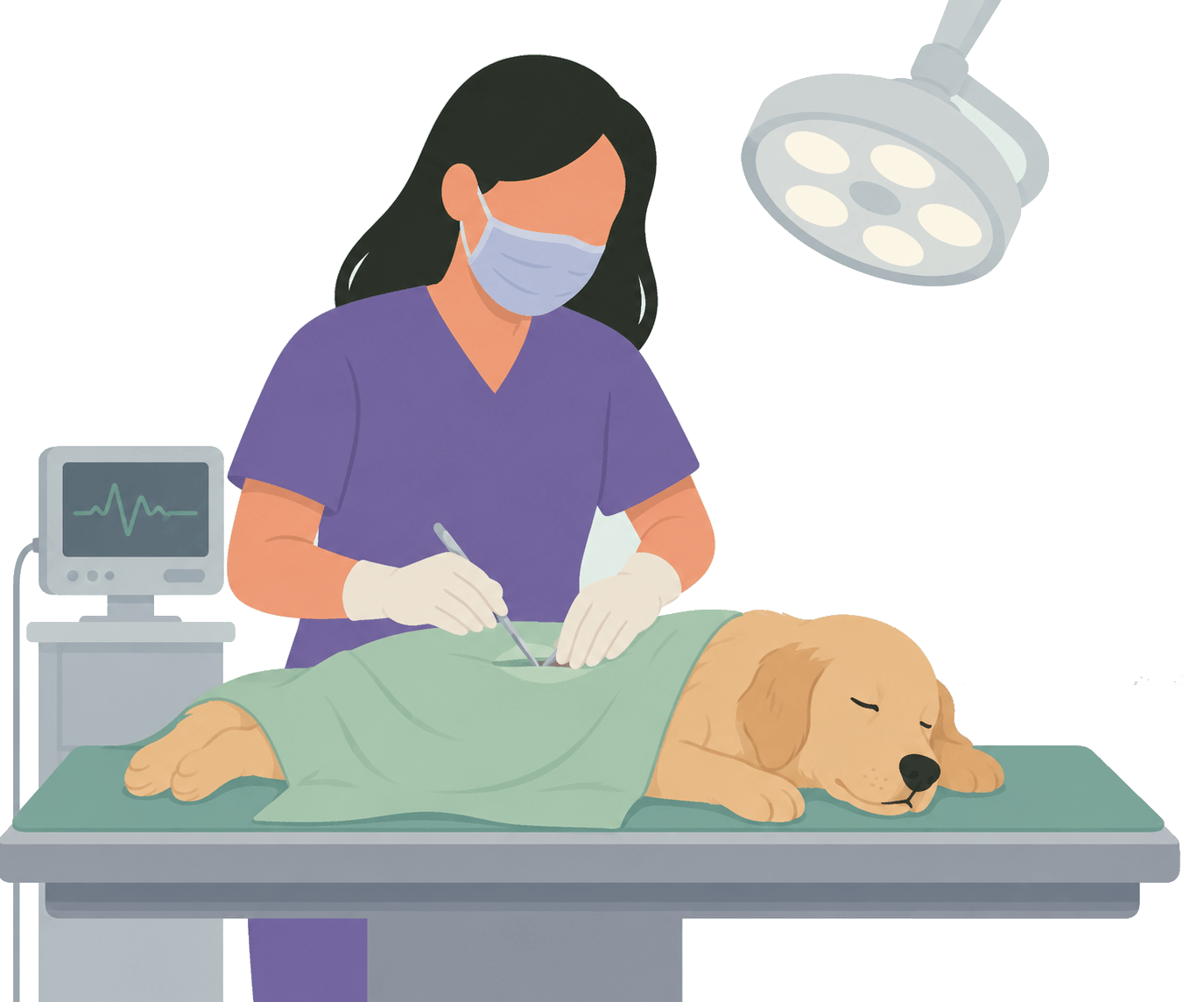
Veterinary surgery requires a prepared team, the right equipment and a rigorous anaesthetic protocol. At Rovira Veterinary Clinic, every procedure is planned in detail: full pre-operative assessment, monitored anaesthesia throughout and post-operative follow-up until complete recovery.
Before any surgery we carry out pre-operative blood tests to confirm your pet is in optimal condition for the procedure. Your animal's wellbeing and safety are always the priority.
If you are unsure whether your pet needs surgery, book a consultation — we assess every case individually and explain all available options, surgical and non-surgical.
Types
What type of surgery does your pet need?

Most common
Soft-tissue surgery
Neutering and spaying, mass and tumour removal, gastrointestinal, bladder and reproductive organ surgery. The most frequent type in small-animal practice.

Locomotor system
Orthopaedic surgery
Repair of fractures, luxations and cruciate ligament rupture. Indicated when medical treatment is not enough to restore mobility and quality of life.
How we work
A complete surgical process, start to finish
Every surgery at our Gràcia, Barcelona clinic follows a structured protocol that does not end with the procedure — post-operative follow-up is part of the service.
Before any operation we explain the procedure, the risks and the recovery plan. We want you to arrive at the appointment fully informed and without any uncertainties.
- 1 Complete pre-operative assessment
- 2 Pre-surgical blood tests
- 3 Individualised anaesthetic protocol
- 4 Continuous vital-signs monitoring
- 5 Aseptic, fully equipped operating theatre
- 6 Pre- and post-operative pain management
- 7 Post-operative follow-up and wound check
- 8 Detailed home-care instructions
Frequently asked questions
What people ask us most about surgery
Is anaesthesia safe for my pet?
Yes. Before any procedure we run pre-operative blood tests and tailor the anaesthetic protocol to each animal's individual characteristics: age, weight, breed and health status. Vital signs are monitored continuously throughout the surgery to ensure maximum safety.
Does my pet need to fast before surgery?
Yes. We generally ask for a fast of 8–12 hours before the procedure. We will give you precise instructions adapted to your pet when you confirm the appointment.
How long is the recovery?
It depends on the type of surgery. A routine neutering usually resolves in 7–10 days. Orthopaedic surgeries may require weeks of rest and progressive rehabilitation. In all cases, post-operative check-ups are included and we support you throughout the whole process.
Does your pet need a procedure? Let's talk.
Book an appointment