
 685 738 325
Preventive Medicine
Leishmaniasis in dogs: symptoms and prevention in Barcelona
16 June 2026 · Updated on 24 August 2026

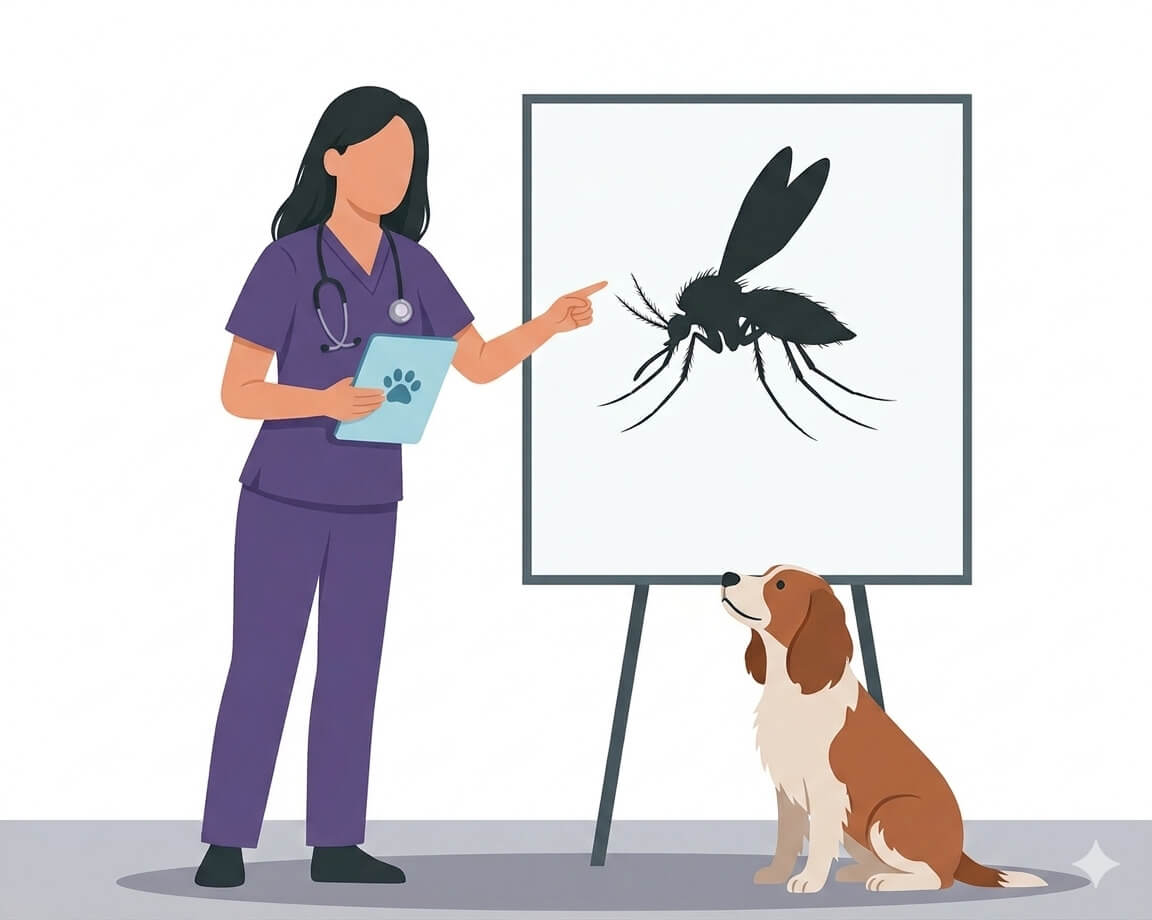
Barcelona and its entire metropolitan area are an endemic zone for leishmaniasis in dogs, and that’s not an alarmist statement — it’s the starting point that should shape how we look after our dogs here. The less intuitive part is that many infected dogs show no symptoms at all for months or even years. There’s no clear moment when “the disease begins” that you can spot just by looking.
That’s why, when it comes to leishmaniasis dogs Barcelona, the right question isn’t “what signs should I watch for at home?” but “how often should we run a check-up?”. Early detection depends far more on regular testing than on waiting for visible signs, which often show up late — or never show up at all.
At Rovira Veterinary Clinic, in the Gràcia neighbourhood, we see this disease fairly often precisely because of where we’re located. This guide explains what canine leishmaniasis is, how to recognise its signs when they do appear, which prevention actually works, and why regular veterinary follow-up is the most reliable tool we have.
What is canine leishmaniasis?
Canine leishmaniasis is caused by a parasite, Leishmania infantum, transmitted through the bite of the sandfly. The sandfly isn’t a common mosquito, although it’s often mistaken for one: it’s a smaller insect, silent in flight, and especially active between dusk and dawn. That dusk-to-dawn activity pattern matters, because it explains why certain walking habits directly affect the risk.
Once inside the dog’s body, the parasite can behave very differently from one individual to another: some dogs develop the disease progressively, and a significant proportion of infected dogs show no visible symptoms, at least for a prolonged period. This doesn’t mean they’re “safe” — it means the parasite is present without anything showing from the outside, which has direct implications for how both prevention and diagnosis should be approached.
Symptoms: the table that helps you spot them
The symptoms of canine leishmaniasis are varied and, on their own, not very specific: many of them can be mistaken for other health problems. Knowing them is useful to stay alert — not to self-diagnose.
| Type of sign | What to look for | Where it usually appears |
|---|---|---|
| Skin | Hair loss (especially around the eyes, the characteristic “glasses” pattern); crusts and wounds that don’t heal | Ears, muzzle, paws, elbows |
| Nails | Abnormal growth; nails that break or become deformed | — |
| General | Weight and appetite loss with no obvious cause; fatigue; exercise intolerance | — |
| Renal / systemic | Drinking and urinating more than usual; nosebleeds | — |
| Joints | Lameness; swollen lymph nodes | — |
Read this table with caution: no single symptom confirms the disease on its own, and a dog can be infected while showing none of these signs. Diagnosing leishmaniasis doesn’t rely on observation at home, but on veterinary testing. If you notice any of these signs in your dog, the right move is to get it checked — but the absence of symptoms is no guarantee of anything, which is exactly what makes leishmaniasis dogs Barcelona a risk worth watching proactively, not just reactively.
Why Barcelona is a risk area
The sandfly is active during the warmer months of the year, with peak activity between dusk and dawn, and it thrives in humid areas with decaying organic matter — which includes Barcelona’s urban parks and green spaces, not just rural settings. Places like Parc de la Ciutadella, Park Güell, Turó Park or the green spaces within Gràcia itself are all part of the environment where this insect can be present.
In recent years, climate change has expanded both the geographic range and the activity window of this insect, meaning areas once considered lower risk now also need to be taken into account. That’s why we talk about the sandfly in Barcelona as a factor to bear in mind for much of the year, not just a couple of specific months.
Living in an apartment, far from the countryside, is no guarantee of protection: a walk through one of the city’s green spaces at the wrong time of day is enough.
How to prevent leishmaniasis: a combined strategy
Preventing leishmaniasis in dogs doesn’t work well if you rely on a single measure in isolation. It works as a system, where each element covers what the others can’t:
- External repellents. Collars or spot-ons with proven effectiveness against the sandfly. They aren’t 100% interchangeable: each format has its own renewal schedule and its own protection profile, so the specific choice is best made together with your vet rather than on your own.
- Avoid walks during the sandfly’s peak activity hours during the risk season, especially at dusk and at night.
- Vaccination. From 6 months of age, a single dose, always with a prior negative serological test required. The leishmaniasis vaccine for dogs reduces the risk of the infection developing into clinical disease, but does not prevent infection entirely — which is why it must always be combined with repellents, never used as a replacement for them.
- Regular blood test check-ups, especially for dogs that routinely walk through parks and green spaces.
If your dog’s vaccination schedule isn’t up to date, you can check our full guide to dog vaccinations in Barcelona, where we also explain how the leishmaniasis vaccine fits into the overall schedule. To choose the right external repellent against the sandfly, see also our complete guide to parasite prevention in dogs and cats, where we explain the differences between product formats and which ones offer real protection against this insect. And if you’d like us to design this strategy specifically for your dog, our preventive medicine service is built exactly for that.
Diagnosis: why regular check-ups are the real key
Leishmaniasis is diagnosed through a serological test, and a PCR test if needed to confirm it further. It isn’t diagnosed from visible symptoms, for a very simple reason: a dog that looks “perfectly healthy” can be infected without anything giving it away from the outside.
This is why, at Rovira Clinic, we recommend including the leishmaniasis test as part of any dog’s annual preventive check-up if they live in Barcelona — not only running it once symptoms appear. Waiting for visible signs often means waiting longer than necessary, and this preventive approach is precisely what makes the difference against leishmaniasis dogs Barcelona in the long run.
What about cats? Feline leishmaniasis
Cats can also become infected with Leishmania infantum, although less frequently than dogs. Leishmaniasis in cats is, on top of that, a far less studied disease than its canine counterpart, which means the main challenge isn’t so much treatment as clinical suspicion: symptoms can easily be mistaken for other feline conditions, making diagnosis more complex.
There is currently no specific vaccine approved for cats. Because of this, in cats with outdoor access showing compatible symptoms, it’s worth keeping leishmaniasis in mind as a differential diagnosis — more as an area to monitor than an established protocol.
What we do at Rovira if your dog tests positive
Getting a positive leishmaniasis test result understandably causes a lot of worry. But a positive result doesn’t always mean active disease: there are infected dogs that live with the parasite for years without ever developing clinical symptoms, their body keeping the infection under a degree of natural control.
The first thing we do in these cases is put the result into context — never treat it in isolation. The follow-up we propose usually combines general control blood work, which lets us monitor the dog’s overall condition, with more specific tests — such as antibody assessment — that help us better understand where the infection currently stands. The exact combination of tests isn’t the same for every dog: it’s decided by the vet based on clinical history, age, lifestyle and previous results for each specific case.
What we can say honestly is that a diagnosed dog, with the right follow-up, can maintain a good quality of life for years. This isn’t a promise of a cure — we never promise that — but a realistic description of what we see in practice when follow-up is done well and consistently. The specific prognosis depends on each case: the timing of diagnosis, the individual dog’s response, and how consistent the check-ups are.
The protocol and the frequency of reviews aren’t fixed: they adapt to each dog’s progress based on the results we get along the way. Lídia Adell and the rest of the team design this follow-up individually, adjusting the plan as each case requires, rather than applying the same scheme to every dog.
Frequently asked questions
— Can my dog pass leishmaniasis on to other dogs or to people?
No. Leishmaniasis is not transmitted through living together, licking, or touching the dog. The sandfly — the vector — is essential for the parasite to complete its biological cycle: without the insect’s bite, there is no transmission under normal circumstances.
— From what age can my dog be vaccinated?
From 6 months of age, as a single dose, provided the prior serological test is negative.
— If my dog lives in an apartment and barely goes to the countryside, is it at risk?
Yes. If it walks through Barcelona’s streets or parks, it’s exposed: the sandfly isn’t exclusive to rural settings — it’s also present in urban green spaces.
— Is leishmaniasis curable?
This is a question that deserves clinical precision, so we’d invite you to ask our team directly at your visit: management and expectations vary a lot depending on the timing of diagnosis and each dog’s particular situation.
If your dog regularly walks through parks or green spaces in Barcelona and Catalonia, the best decision you can make today is to include the leishmaniasis test in their annual preventive check-up. At Rovira Veterinary Clinic, in Gràcia, we help you design a prevention strategy tailored to your dog through our preventive medicine service. If you have any questions or want to book an appointment, you can contact us any time.
Sources
Do you have any questions about your pet?
Book an appointment