
 685 738 325
Preventive Medicine
Dog vaccinations in Barcelona: complete 2026 schedule
12 June 2026 · Updated on 24 August 2026

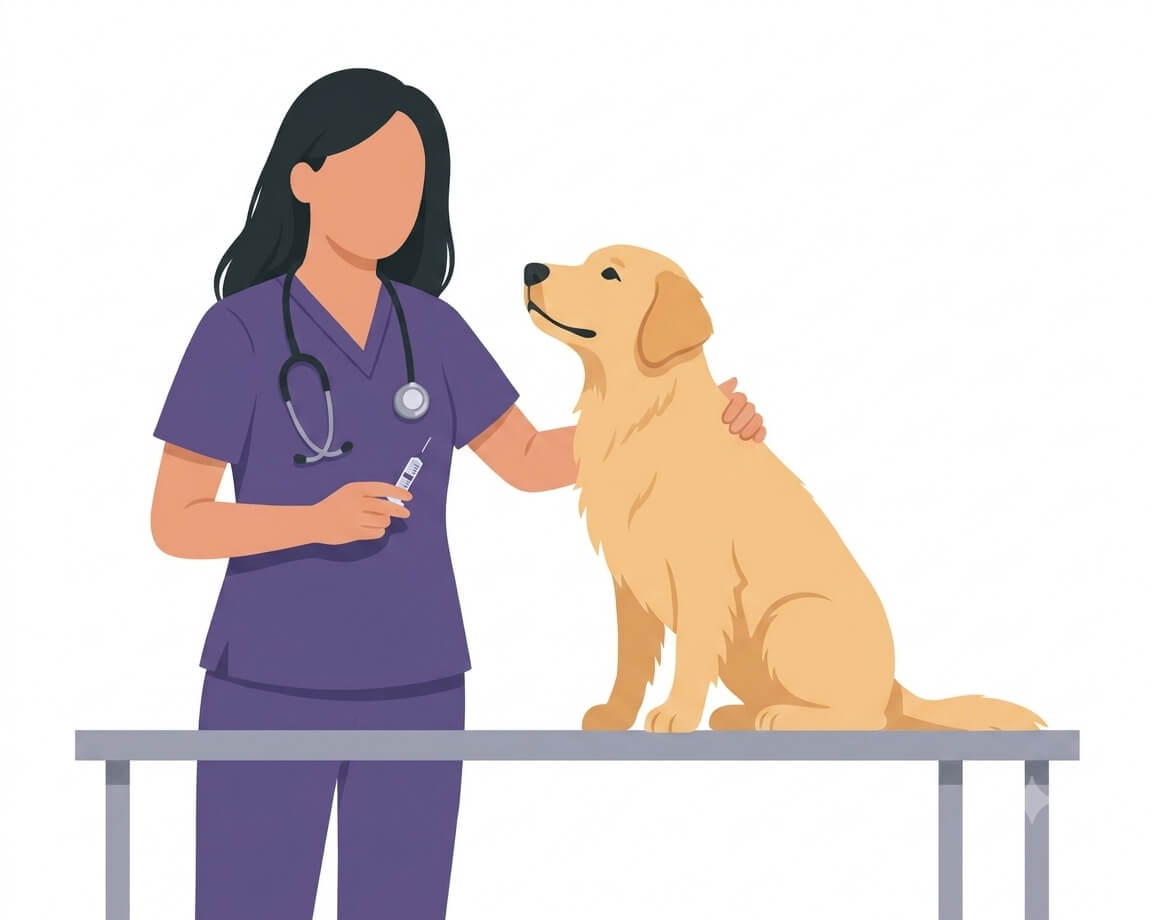
If you’ve been looking for information about dog vaccinations in Barcelona, you’ve probably come across generic guides that overlook something important: the vaccination schedule is not the same across Spain. What’s sufficient in Madrid can leave your dog unprotected here.
Barcelona and its metropolitan area are an endemic zone for leishmaniasis, a disease transmitted by a tiny sandfly that lives in the city’s parks and green spaces for much of the year. That changes the protocol. Catalonia also has a specific legal situation regarding the rabies vaccine that’s worth understanding clearly before making decisions.
At Rovira Veterinary Clinic, in the Gràcia neighbourhood, we’ve been designing vaccination protocols tailored to dogs living in Barcelona — adapted to their environment, lifestyle and the specific risks of our area. This guide covers the essentials.
Which vaccines are compulsory in Barcelona?
Catalonia is, along with Galicia, the only Spanish autonomous community where the rabies vaccine is not legally mandatory. The decree that would make it compulsory has been in the pipeline for years and is expected to come into force soon, but as of today there is no legal obligation.
That doesn’t mean you shouldn’t get it. The rabies vaccine is required in several very common situations:
- Travelling outside Catalonia to any other region of Spain
- Kennels and doggy day-care, which require it as standard
- Travelling within the European Union, where it’s an essential requirement for the EU pet passport
- Re-entering Spain after travelling abroad
In practice, if your dog ever leaves the neighbourhood — on a trip, on holiday or for a stay at a kennel — the rabies vaccine is essential. Our recommendation is to always vaccinate, regardless of the legal requirement.
The complete vaccination schedule for dogs in Barcelona
The dog vaccination schedule in Catalonia starts at 6–8 weeks of age, with a more intensive initial phase during the first year, followed by annual boosters.
Puppies (6–16 weeks)
| Week / age | Vaccine | Notes |
|---|---|---|
| 6–8 weeks | Multivalent — 1st dose (distemper, parvovirus, hepatitis, parainfluenza, leptospirosis) | First dose; maternal antibodies may still interfere |
| 10–12 weeks | Multivalent — 2nd dose | Booster of the first |
| 14–16 weeks | Multivalent — 3rd dose | Complete the initial cycle |
| From 6 months | Rabies | Recommended even though it is not mandatory in Catalonia |
| From 6 months | Leishmaniasis (1 dose) | Prior negative serological test required |
Adult dogs (annual boosters)
| Vaccine | Frequency | Notes |
|---|---|---|
| Multivalent (distemper, parvo, hepatitis, leptospirosis) | Annual | Some formulations allow every 3 years for certain components — check with your vet |
| Rabies | Annual or every 3 years depending on the vaccine | Essential for travel |
| Leishmaniasis (LetiFend or CaniLeish) | Annual | Always requires a prior negative serological test |
| Kennel cough (Bordetella + parainfluenza) | Annual | Especially recommended if your dog goes to kennels, dog parks or shows |
Leishmaniasis in Barcelona: why it matters especially here
Leishmaniasis in dogs in Barcelona is not a hypothetical risk. It’s an everyday reality. The sandfly — the insect that transmits the disease — is present throughout the metropolitan area, and climate change has extended its activity: it is now active from spring well into autumn, and its geographic range has expanded into urban areas that weren’t endemic ten years ago.
A dog walking through Parc de la Creueta del Coll, Turó Park or any green space in Gràcia is exposed. So are apartment dogs: the sandfly can come in through an open window at dusk.
What you need to know about the leishmaniasis vaccine:
- Two vaccines are available: LetiFend and CaniLeish. Both require a vet’s prescription.
- They reduce the risk of developing clinical disease by up to 72%, but do not prevent infection entirely.
- The initial protocol is a single dose, followed by annual boosters.
- Essential condition: before the first dose, a serological test is required to confirm the dog has had no prior contact with the parasite. If the test is positive, vaccination is not possible.
- Maximum protection is achieved by combining the vaccine with sandfly repellents (collar or spot-on with permethrin or flumethrin), especially during the months of highest vector activity. If you have questions about which product to choose or how often to renew it, our complete guide to parasite prevention in dogs and cats covers this in detail.
If your dog hasn’t been vaccinated against leishmaniasis yet, or you can’t remember when the last dose was, come and see us. It’s one of the things we always review as part of our preventive medicine service.
One important point: at Rovira, a vaccination appointment isn’t just the injection. It always includes a full physical examination. We use every visit to check the animal’s general condition, teeth, weight and body condition. That’s part of how we approach preventive medicine.
What makes vaccinating in Gràcia with Rovira different
Vaccinating at a place that knows your dog from day one has a real impact on their long-term health. Here’s what you’ll find at our clinic in the Gràcia neighbourhood:
- Personalised follow-up from day one. You don’t have to remember when the next dose is due — we remind you. Every dog has their own record and up-to-date schedule.
- The protocol is designed by the vet around your specific dog. Does it go to parks? Travel often? Live with other animals? Lifestyle determines which vaccines are a priority and how often.
- Every vaccination visit includes a full physical examination. We don’t just update the vaccination record — we check the animal from head to tail.
- Years of experience vaccinating dogs in the Gràcia neighbourhood. We know the area’s particularities, the local risks, and many families whose dogs were puppies when we first met them.
Frequently asked questions about dog vaccinations in Barcelona
— Can I travel to France with my dog without the rabies vaccine?
No. The rabies vaccine is compulsory for leaving Spain to any EU country. Without it, your dog cannot obtain the European pet passport required at the border. Even though it’s not legally required internally in Catalonia, it’s essential for any international trip.
— How often does the leishmaniasis vaccine need to be repeated?
Annually, always with a prior serological test confirming the result is still negative. If the test comes back positive, it means the dog has been in contact with the parasite and cannot be vaccinated.
— Does my apartment dog also need the leishmaniasis vaccine?
Yes, if it goes outside in Barcelona. The sandfly is present in parks, gardens and urban green spaces throughout the city, including Gràcia. It can also enter the home through open windows at dusk, which is when the insect is most active. Living in an apartment does not eliminate the risk.
— At what age can a puppy start being vaccinated?
From 6–8 weeks of age, once the maternal antibodies — received through the mother’s milk — start to decline. Starting earlier is not effective because those maternal antibodies neutralise the vaccine before it can work.
— What if my adult dog has never been vaccinated?
The protocol restarts from scratch, just as with puppies: several initial doses spaced weeks apart to build immunity, followed by annual boosters. There’s no problem starting late, but the sooner the better.
If you have any doubts about exactly which vaccines your dog needs, or want to review their history and update the protocol, we’re here at Rovira Veterinary Clinic — in the heart of Gràcia, Barcelona. The first vaccination visit always includes a full examination and a personalised preventive plan.
View our preventive medicine service →
Sources
Do you have any questions about your pet?
Book an appointment