
 685 738 325

Preventive Medicine
Rabies antibody test: what it is, when your dog or cat needs it and how it's done
29 September 2026

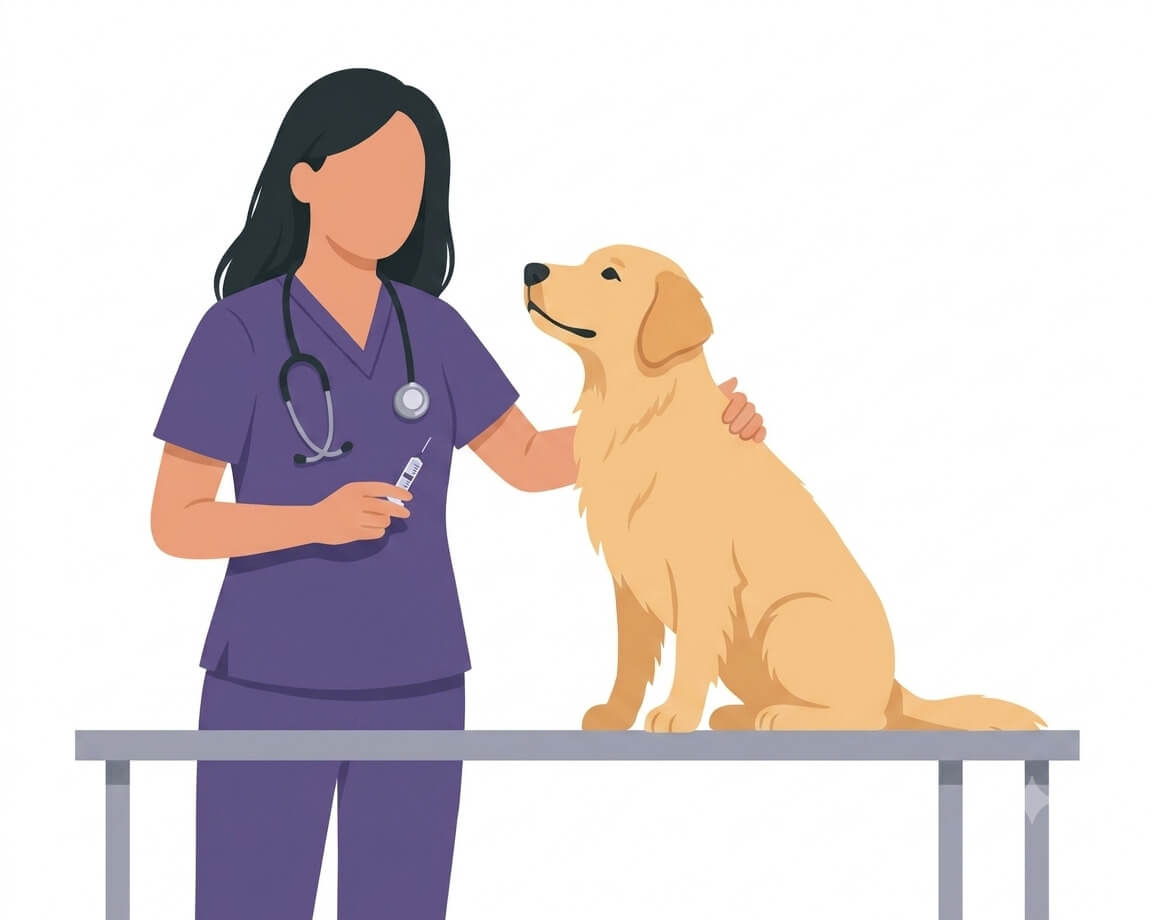
More and more families in Gràcia travel with their dog or cat, and not always to France or Italy: Morocco, Turkey, Thailand, South Africa, Brazil, Japan. And that’s where a requirement appears that surprises many people once the tickets are already bought: the rabies antibody test, also called the titre test or rabies serology.
It isn’t just another vaccine. It’s a blood test that proves the vaccine has worked, it follows very strict timings, and the result can take weeks. Discovered too late, it can mean postponing the trip or the animal not being able to come home normally.
In this article we explain exactly what it is, which trips require it, when it has to be done in relation to the vaccine, and how we manage it at our clinic in Barcelona, including sending the sample to the approved laboratory.
What the rabies antibody test is
When we vaccinate a dog or cat against rabies, its immune system produces neutralising antibodies against the virus. The antibody test measures how many of those antibodies are in the blood. The aim isn’t to find out whether the animal has rabies — it doesn’t — but to document that it is protected.
EU rules set a specific threshold: the result must be 0.5 IU/ml or higher (international units per millilitre). Below that figure, the test is not considered valid for travel even if the animal is vaccinated.
Two important details:
- The analysis must be carried out by a laboratory approved by the European Union. Not just any lab will do: the list of approved laboratories is public and the destination country’s authorities check it.
- The techniques used (FAVN or RFFIT) are virus neutralisation tests that only a handful of reference laboratories perform. That’s why results take weeks rather than days.
When the test is required: not for every trip
This is where most of the confusion lies. To move within the European Union — France, Italy, Portugal, Germany — no test is needed: a microchip, a valid rabies vaccination and the EU pet passport are enough. We cover this in our guides to dog vaccines and cat vaccines in Barcelona.
The antibody test comes into play in two situations:
1. To return to the European Union from a “non-listed” country
This is the case most people overlook, because they think about the outbound trip and not the return. The EU divides non-EU countries into two groups:
| Group | Examples | Antibody test needed to return to the EU? |
|---|---|---|
| Listed countries (controlled risk) | United Kingdom, Switzerland, Norway, Andorra, United States, Canada, Mexico, Argentina, Chile, Australia, Japan, United Arab Emirates | No. Microchip, valid vaccination and a health certificate or passport are enough |
| Non-listed countries | Morocco, Turkey, Tunisia, Egypt, India, China, Thailand, Vietnam, South Africa, Brazil, Colombia, Peru, most of Africa, Asia and Latin America | Yes. Without a valid test, the animal cannot enter the EU normally |
If you take your dog to Morocco for a weekend, you won’t be asked for the test on the way out (Morocco has its own requirements), but you will need it to come back to Spain. And it can’t be done there and used the next day: there are waiting periods, explained below.
2. To enter some non-EU countries
Some destinations require the titre test before they let the animal in, with their own timings, sometimes very long: Japan, Australia, New Zealand, Taiwan, Singapore, South Korea, South Africa and the United Arab Emirates, among others. Each country has its own protocol (number of prior vaccinations, waiting days after the test, quarantine) and these change over time, so the destination’s official requirements should be checked months in advance. The Spanish Ministry of Agriculture (MAPA) publishes export requirements by country, and the destination’s embassy or veterinary service is the definitive source.
The timings: what you really need to understand
The antibody test itself isn’t complicated. The timings are, and that’s where almost all the problems happen.
The microchip comes before the vaccine
It seems a minor detail, but it isn’t: the rabies vaccine only counts if it was given after the microchip was implanted (or on the same day). If the animal was vaccinated before being chipped, that vaccination is not valid for travel purposes and must be repeated.
At least 30 days between the vaccine and the blood sample
Blood must be drawn at least 30 days after vaccination. If the animal has been vaccinated for years without any gap, this counts from the first valid vaccination, so it can be done at any time. If it’s a first vaccination or there has been a gap, those 30 days must pass.
The 3-month wait to return from a non-listed country
This is the timing that wrecks the most trips. To enter the EU from a non-listed country, 3 months must have passed since the date of the blood sample with a favourable result. But there is a very important exception that works in our favour:
If the test is done in the EU before leaving, the 3-month wait does not apply. The animal can leave and come back freely, as long as the vaccination remains valid. In other words: if your dog has the titre test done here in Barcelona before going to Morocco or Thailand, it can come back whenever you like. If you leave without doing it and have it done there, it will have to wait three months from the sample date before it can enter Europe.
The result lasts a lifetime… on one condition
Once a valid result has been obtained, the test never needs repeating as long as rabies vaccination is kept up to date without any gap. If the vaccine expires even one day before the booster, the chain is broken and everything starts again: vaccinate, wait 30 days and repeat the serology. So if your animal already has a titre test, keeping the rabies vaccine in date is the most valuable thing you can do.
How we do the rabies antibody test at Rovira
The test is part of our preventive medicine service and we manage it from start to finish.
- Document check first. Before drawing blood we scan the microchip, check the date and validity of the rabies vaccination and make sure everything is correctly recorded in the EU pet passport. If something is wrong (chip implanted after the vaccine, expired vaccine, fewer than 30 days), we catch it here rather than after you’ve paid for a test that wouldn’t be valid.
- Blood sample. A routine blood draw taking a few minutes, with no sedation or special fasting needed. In cats we use low-stress handling, as with all our tests in feline medicine.
- Sample preparation and dispatch. We centrifuge, separate the serum and send it to the approved laboratory with the paperwork it requires (animal identification, vaccination dates, vet details). We handle this step: you don’t need to deal with the laboratory at all.
- Result and official entry. When the report arrives, we review it, give you a copy and record the result in the passport with the sample date, which is the date that counts for the waiting periods. We keep a copy in the clinical record in case you need it in future.
- Trip planning. With the result in hand we go through the rest of the destination’s requirements with you: tapeworm treatment against Echinococcus if the country requires it, official health certificate, departure timings. And if the destination carries risks for other diseases — as with leishmaniasis on returning to Barcelona — we factor that in too.
How much time you need: a real example
A family in Gràcia wants to spend August in Morocco with their dog, which has never been vaccinated against rabies. Counting backwards:
- Early April: microchip (if not already chipped) and rabies vaccine.
- Early May: 30 days have passed; blood sample taken and sent to the laboratory.
- Late May / June: result arrives. If valid, it’s recorded in the passport. If insufficient, there’s still time to revaccinate and repeat.
- August: the trip. Because the test was done in the EU before leaving, the dog can return without the 3-month wait.
If that same family started in July, they wouldn’t make it. And if they had the test done in Morocco, the dog couldn’t return until three months after the sample date.
When to book an appointment
- You’re travelling with your dog or cat outside the European Union, even for a short or return trip.
- You’re moving to, or spending time in, a country that requires a titre test for entry.
- You’re returning to Spain after living abroad with an animal and aren’t sure whether you need the test.
- Your animal already has a titre test and the rabies vaccine is about to expire: renewing it on time avoids repeating the whole process.
- You simply want to get it done so there’s no rush in future.
If you have a trip in mind, book an appointment at our clinic in Gràcia with time to spare. We’ll check your dog’s or cat’s paperwork, work out the timings for your specific destination and take care of the whole process, from the blood sample to the passport entry.
Sources
Do you have any questions about your pet?
Book an appointment