
 685 738 325
Feline Medicine
How to take your cat to the vet without stress: a complete guide from carrier to consulting room
3 September 2026 · Updated on 3 September 2026

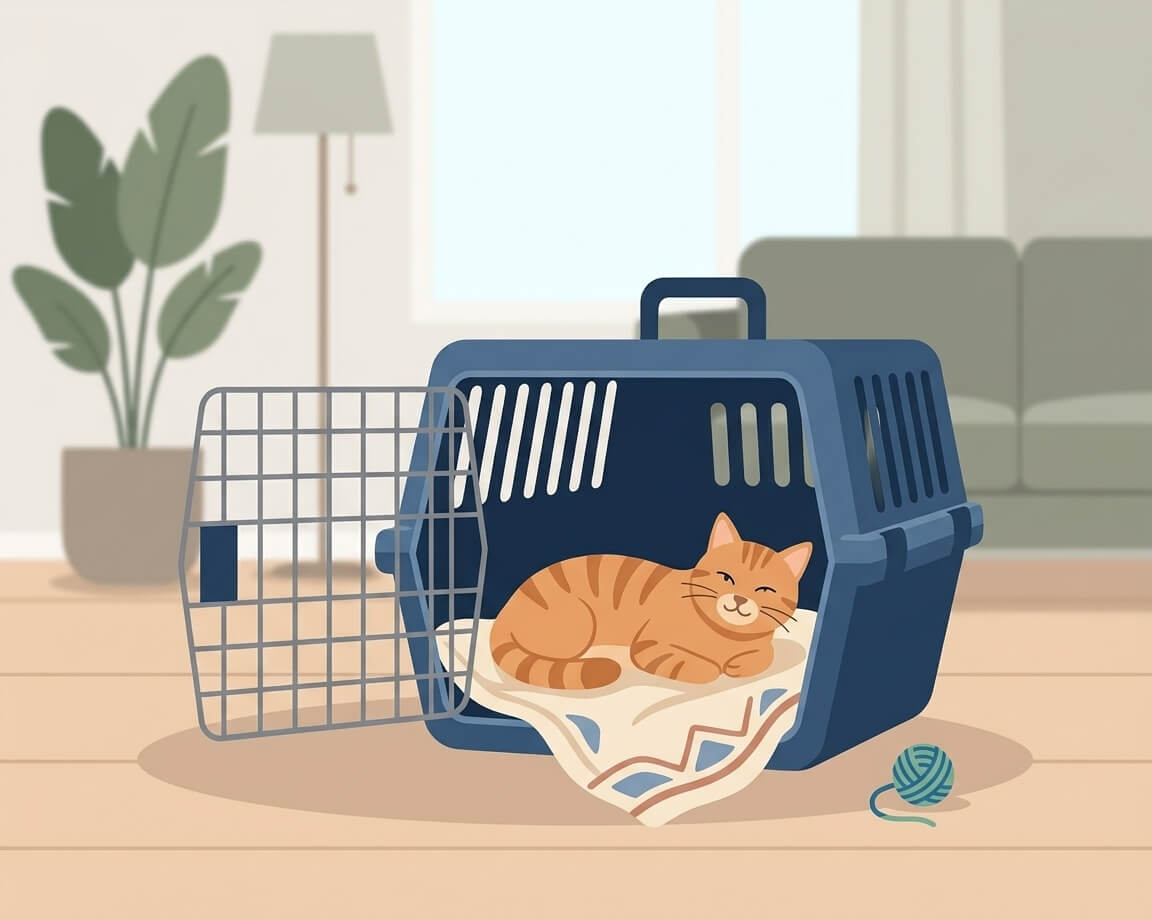
If you’ve found your way here, you probably know the scene. You take the carrier out of the cupboard and by the time you turn round, your cat has vanished under the bed. What follows is twenty minutes of negotiation, a scratch or two, a car journey soundtracked by continuous meowing, and the feeling that you’ve done something terrible to an animal you only wanted to take for a check-up.
The first thing worth saying is that this happens to almost everyone. It isn’t that your cat is especially difficult, or that you’re doing it wrong. It’s that a vet visit brings together, in the space of a couple of hours, virtually everything a cat is wired to avoid. And the second thing — the good part — is that nearly all of that stress can be reduced enormously. Not with last-minute tricks, but with preparation that starts weeks earlier and that, in most cases, completely changes how your cat experiences the whole thing.
In this guide we explain why it affects them so much, the mistake almost all of us make without realising, and exactly what to do before, during and after the appointment. No magic formulas, but things that genuinely work.
Why vet visits are so stressful for a cat
To understand your cat’s reaction, it helps to stop thinking like a human for a moment. We see a half-hour check-up; your cat is living through something else entirely.
Cats are territorial and deeply routine-driven. Their sense of safety depends on being in a familiar space that smells of them, where they know where everything is and which way to escape if needed. Unpredictability isn’t merely inconvenient to them: it’s a real, measurable source of stress.
A vet visit breaks all of that at once:
- They lose control of their space. They’re put in a box they can’t get out of and taken somewhere they can’t flee from. For an animal whose main defensive strategy is to hide or leave, having no escape route is the most distressing thing that can happen.
- The car makes no sense to them. The floor vibrates, the scenery moves, there are noises they can’t identify. Many cats also get travel sick.
- Unfamiliar smells — and not just unfamiliar ones. A cat’s sense of smell is vastly sharper than ours. A clinic holds traces of dogs, of other stressed cats, of cleaning products. We notice almost nothing; they’re reading a full report of everything that has happened there.
- Being handled by strangers. Having someone unknown hold and touch them puts a cat in a position of maximum vulnerability.
And there’s one more factor almost nobody mentions: you. Cats read body language and tone of voice with great precision. If you arrive tense, rushed, speaking loudly or moving abruptly, your cat picks it up and it confirms their suspicion that something is wrong. You don’t need to fake cheerfulness; moving slowly and speaking quietly is enough.
The most common mistake: the carrier as a “box of bad surprises”
Here, most likely, is 80% of the problem.
In most homes the carrier lives on top of a wardrobe or in a storage room, and comes out twice a year: vaccination day and the day of some emergency. From the cat’s point of view, the conclusion is inevitable and perfectly logical: that box is the signal that something bad is about to happen.
Your cat isn’t afraid of the plastic. They’re afraid of what they’ve learnt comes afterwards. And because cats form associations very readily, a couple of negative experiences is all it takes for the box to become a warning. That’s why they hide before you’ve even opened it: they aren’t reacting to the carrier, they’re reacting to the prediction.
The solution isn’t to fight the carrier more effectively on the day — it’s to break that association long before you need it.
And this isn’t just intuition. In a study published in 2018, a group of cats given prior carrier training was compared with an untrained group during a simulated vet visit. The trained cats showed less stress during the car journey, fearful behaviours such as hiding and panting disappeared, and — the most practical finding of all — their veterinary examination was significantly shorter. Every one of them accepted treats during the visit; in the untrained group, only a few did.
Put another way: the time you spend on the carrier at home translates into a quicker, easier visit for your cat.
How to turn the carrier into a safe place (weeks before the appointment)
The goal is simple to state: the carrier should stop being an event and become part of the scenery. Just another piece of furniture, no more interesting than the sofa.
1. Take it out of the cupboard for good. This is the important change, and the only one that really isn’t negotiable. The carrier stays out, in a quiet area where your cat spends time, with the door open or removed altogether. Not for a few days before the appointment: permanently.
2. Make the inside comfortable. A soft blanket, ideally one that already smells of them or of you. Their own scent is a powerful safety signal for a cat: it turns a neutral space into familiar territory.
3. Build positive associations, without forcing anything. Drop a treat inside now and then, without saying anything and without standing there watching. Put their favourite toy in it. If one day they choose to sleep in there, don’t celebrate out loud or go over — leave them be, which is exactly what you want them to learn: nothing happens in here.
4. Never use it as punishment or as a way to catch them. If the carrier is where they end up after doing something they shouldn’t, or the only time you pick them up is to put them inside, all the previous work collapses.
5. Once they go in by themselves, practise the next steps. Close the door for a few seconds and open it again. Another day, lift it briefly and set it back down. Later on, take a short drive that doesn’t end at the clinic. Each step short and positive. If at any point they get anxious, you’ve gone too fast: go back to the previous step.
Which carrier to choose
Not all carriers make things equally easy, and this is one of those small details that changes the experience considerably.
The best option is a rigid carrier that opens from the top as well as the front, or better still one that comes apart, with an upper half that can be lifted off via clips.
The reason is very specific. When a cat is frightened, they grip the floor of the carrier, and pulling them out through the front door is the exact opposite of what they need: a struggle, the sensation of being dragged, and a total loss of control. With a top-opening carrier, there’s no need to take them out at all. The top section is lifted away and the cat stays in the base, on their own blanket, and much of the examination can happen right there. They stay put, somewhere that smells of them. The difference in tension levels is enormous.
| Recommended | Best avoided | |
|---|---|---|
| Material | Rigid, stable | Soft-sided, collapses and offers no sense of shelter |
| Opening | Top + front, or removable lid | Front only, forces you to pull them out |
| Size | Enough to turn round and lie down | So large they slide about in the car |
| Cleaning | Removable base, easy to wash | Hard to clean after an accident |
Soft fabric carriers tend to be convenient for the human and considerably worse for the cat: they collapse, offer no protection in the car, and lack that rigid, den-like feel cats find reassuring.
A note on size: bigger isn’t better. It should let them stand up, turn round and lie down, but if there’s too much spare room they’ll be thrown from side to side in the car.
The day of the visit: before, during and after the journey
Before leaving the house
- Don’t feed them in the hours beforehand. Stress and car motion are a poor combination with a full stomach, and vomiting during the journey is common. If your appointment includes blood work, check the exact fasting times anyway.
- If you use pheromones, do it with enough lead time. Spray the inside of the carrier 15-30 minutes before putting your cat in — never at the last second and never with them inside: the product needs that time to evaporate.
- Get everything ready before you go to fetch them. Blanket in place, cloth to hand, keys and paperwork sorted. Don’t let them watch you pacing anxiously around the house.
- Close doors and windows. If they sense what’s coming and there’s an escape route, they’ll take it.
Getting them in without a fight
If the groundwork is done, they’ll often walk in themselves after a treat. If not:
- With a top-opening carrier it’s far easier: lift your cat calmly and lower them in from above, rather than pushing them head-first at the door.
- Another option is to wrap them gently in a towel and put them in like that. Gentle containment reassures many cats and protects your arms.
- Support their weight from underneath, never by the chest alone, and hold them against your body.
- If it starts going badly, stop for a moment. A minute’s pause usually works better than pressing on with an already agitated cat.
In the car
- Cover the carrier with a light cloth, leaving air circulation. Fewer visual stimuli, less stress.
- Secure it properly, in the footwell behind the front seat or on the seat with the belt through it. It shouldn’t slide about on corners.
- Drive smoothly and avoid sharp braking. Music low, or none at all.
- Talk to them now and then, calmly. Your voice is one of the few familiar things they have left at that moment.
- Never open the carrier in the car, however hard it is to listen to them cry. A loose cat in a moving vehicle is a serious danger to them and to you.
In the waiting room and during the consultation
For many cats the waiting room is the worst part of the entire visit: unknown territory, intense smells and, often, dogs a short distance away.
- Never put the carrier on the floor. Down there your cat is at exactly nose height for every dog in the room, with no way to move away. Put it on a chair, on your lap, or on the counter if they’ll let you. To a cat, height means safety.
- Keep the cloth over it. It’s still useful here.
- Keep your distance from other animals, especially dogs, however calm they look.
- Don’t open the door to reassure them. Putting a hand in or letting them poke their head out in a room full of stimuli usually makes things worse, quite apart from the obvious risk of them bolting.
- If your cat really struggles in waiting rooms, say so when you book. Many practices can offer a quiet slot, call you in from the car, or take you straight through to the consulting room.
Once inside, let the vet set the pace. Good feline handling usually starts by not pulling the cat straight out: the carrier is opened, they’re given a few seconds to emerge on their own, and whatever can be examined without forcing awkward positions is examined first. If your carrier comes apart, mention it — that way the vet can work directly on the base.
And one thing you can do: describe what you’ve seen at home. Changes in the litter tray, in appetite, in sleep, in how they move. Many of the most valuable details in a feline consultation don’t come from the examination but from what the owner has observed — particularly given how well cats hide the fact that they’re unwell.
After the visit: helping your cat recover
The visit doesn’t end when you get home. What you do in the following hours counts too.
Let them come out on their own. On arrival, put the carrier down in a quiet room, open the door and walk away. Don’t lift them out, don’t call them, don’t stand there waiting. They’ll emerge when they’re ready — it might take a minute or half an hour.
Give them space. They’ll probably hide for a while. That’s completely normal. Leave water and food accessible and don’t go looking for them.
Don’t tell them off for any of it. Not for the crying, not for the scratches, not if they’ve urinated. All of that was fear, not disobedience, and punishment only reinforces the idea that the carrier is something dreadful.
Watch how your other cats react. If you live with more than one, the returning cat carries clinic smells and may be met with hissing or even aggression from their housemates. It’s a well-known phenomenon and usually settles on its own within a few hours. If things are tense, separate them for a while and let the returning cat regain their own scent before reintroducing them.
Keep an eye on the rest of the day. Being a bit subdued for a few hours is within the range of normal. Not eating at all, not drinking, or still hiding the next day is not — in that case, ring the clinic.
And put the carrier back where it was: out. This is the detail most people overlook. If you return it to the cupboard the moment you get home, you’ve just confirmed to your cat that the box only appears for bad things. Leave it open again, blanket inside, and within a few days it will have gone back to meaning nothing at all.
Frequently asked questions
Why does my cat hide the moment they see the carrier?
Because they’ve learnt what comes next. If the carrier only appears on the day of the appointment, your cat associates it with confinement, the car and handling, and reacts before you’ve opened it. It isn’t stubbornness: it’s a learned association, and it’s broken by leaving the carrier permanently on view at home until it stops being an alarm signal.
Is it normal for my cat to urinate from fear in the carrier?
It’s more common than most people realise, and it’s a physiological response to fear, not misbehaviour. A very frightened cat may urinate, defecate, salivate excessively or pant. Never tell them off for it. What it does tell you is that they need more preparation beforehand, and it’s worth mentioning to your vet.
Do feline pheromones actually work?
They help many cats, though not all. They’re synthetic analogues of the facial pheromone cats deposit when they rub against furniture to mark a place as safe. Spray the carrier 15-30 minutes beforehand, to give it time to evaporate. They work far better as a complement to carrier preparation than as a last-minute fix.
Can I give my cat something to calm them before leaving the house?
Never on your own initiative. Many products intended for humans are toxic to cats, and some veterinary calming medications are contraindicated in animals with heart, kidney or liver problems — precisely the most common conditions in older cats. For cats with severe anxiety there are options your vet can assess based on their history. If your cat really struggles, raise it before the appointment.
How far in advance should I start preparing the carrier?
Ideally weeks in advance, and permanently: the carrier goes from stored away to always accessible. If your appointment is soon and there isn’t time, any head start helps — bringing it out a few days before already beats bringing it out that morning.
I have two cats — can I take them in the same carrier?
Better not to, even if they get on. A frightened cat may react aggressively towards their companion, and that experience can damage the relationship between them for quite some time. One cat per carrier.
What if my cat is impossible to get in and I’ve run out of patience?
Talk to your clinic before the day of the appointment rather than fighting the battle alone. Some cats need a specific plan, and it’s better to prepare one with time to spare than to end up in a struggle that leaves its mark on the next visit.
Does my indoor cat need to see the vet if they never go outside?
Yes. Living indoors protects against accidents, fights and infections, but not against kidney disease, dental problems or hyperthyroidism. You can find the recommended intervals by age in our guide to how often to take your pet to the vet.
At Rovira we know your cat isn’t a small dog
Everything you’ve read so far is half the job. The clinic provides the other half.
A cat who arrives well prepared from home and then meets a noisy room, a rushed schedule and rough handling loses in five minutes everything they had gained. That’s why low-stress handling isn’t an optional extra: it’s part of practising feline medicine properly. A calm cat is examined more thoroughly, tolerates more tests and produces more reliable results.
At Rovira Veterinary Clinic in Gràcia, Barcelona, Dr. Lídia Adell has trained specifically in feline practice — she is a specialist in Feline Medicine (Ifevet PGD) — and low-stress handling is one of the pillars of our feline medicine service: respecting the cat’s pace, avoiding forced restraint wherever possible, and working on the carrier base instead of pulling them out.
If your cat struggles with visits, or you’ve been putting off a check-up for exactly that reason, let us know when you book. We can arrange the appointment to be as calm as possible — and that’s often the difference between a cat who stops going to the vet and one who gets the care they need.
Sources
Do you have any questions about your pet?
Book an appointment