
 685 738 325
Feline Medicine
Cat vaccinations in Barcelona: complete schedule and types guide
7 July 2026 · Updated on 24 August 2026

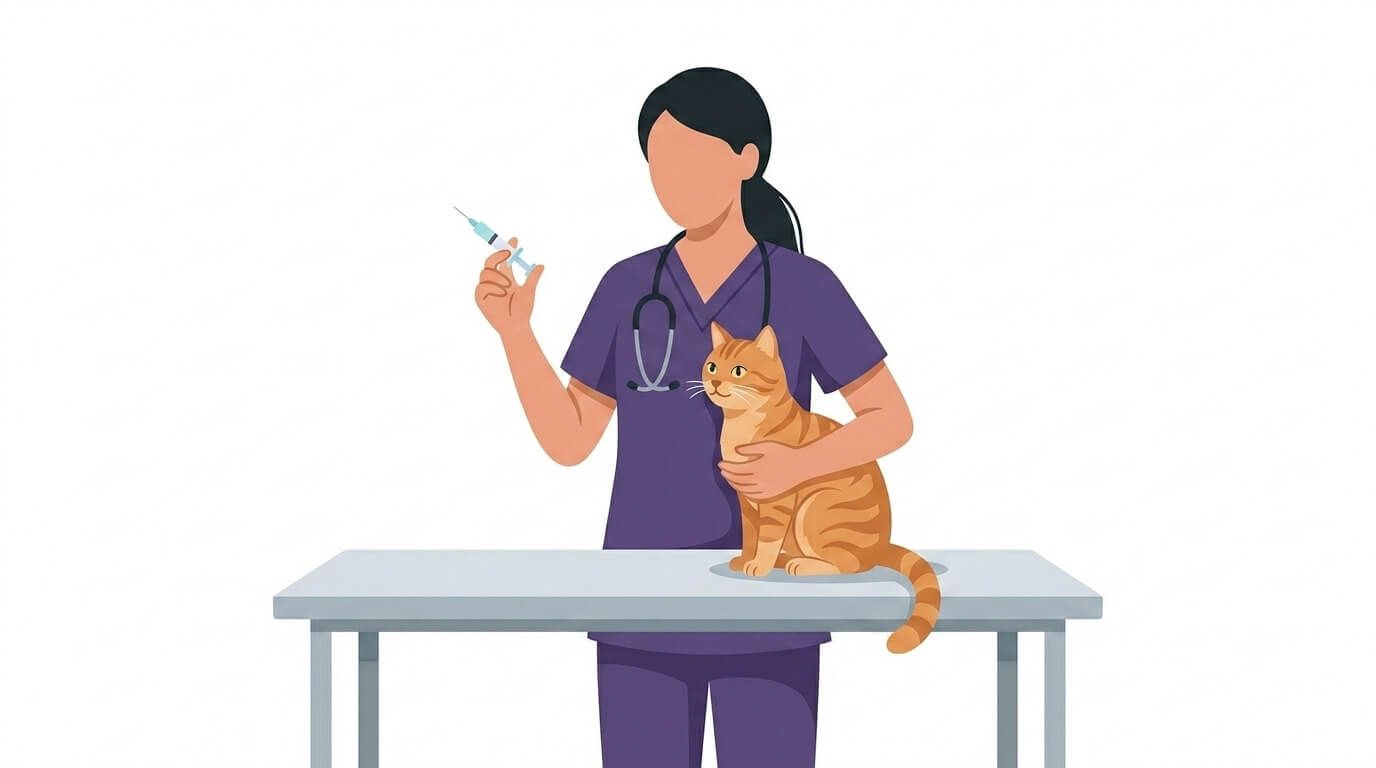
Vaccinating your cat is one of the most important health decisions you’ll make as an owner. Many of the diseases that feline vaccines prevent have no cure once contracted. Especially in kittens.
But not every cat needs the same protocol. The right schedule depends on age, whether they live indoors or have outdoor access, and their history of contact with other cats.
In this guide we explain, vaccine by vaccine: which ones exist, which are actually necessary for your cat, when they’re given, and what to expect afterwards.
Quick index
Core vaccines: recommended for every cat
These are called core vaccines because the international veterinary community (such as the WSAVA and the ABCD) recommends them for practically every cat, wherever they live. The reason: the high risk of contagion and the severity of the diseases they prevent. In Spain they’re usually grouped into the well-known feline trivalent vaccine:
• Feline panleukopenia (feline distemper)
The most severe of the three viral diseases. It attacks the bone marrow and intestine, causing severe gastroenteritis and a drastic drop in immune defences. In unvaccinated kittens, mortality is extremely high. And it spreads with enormous ease, even through contaminated objects, surfaces or clothing, with no need for direct contact between cats.
• Feline viral rhinotracheitis (feline herpesvirus)
Causes a severe upper respiratory infection: sneezing, nasal discharge, conjunctivitis and, in severe cases, corneal ulcers. It’s a virus that is never fully cleared. The cat becomes a chronic carrier and can suffer relapses during periods of stress or lowered immunity.
• Feline calicivirosis (Calicivirus)
Another very common cause of feline respiratory disease. It shares symptoms with herpesvirus, but calicivirus has a strong tendency to cause very painful ulcers in the mouth, gums and tongue. That prevents the cat from feeding properly.
Non-core vaccines: depending on your cat’s lifestyle
These vaccines are recommended by assessing the real risk of environmental exposure. Case by case, not automatically.
• Feline leukaemia (FeLV)
This virus destroys the immune system and can cause tumours. It’s transmitted through close, prolonged contact between cats: mutual grooming, shared bowls, fight wounds or mother-to-kitten transmission. It’s an essential vaccine if your cat:
- Has outdoor access or goes onto communal terraces.
- Lives with other cats of unknown health status.
- Was recently adopted from the street or a feral colony.
• Feline chlamydiosis and other specific vaccines
The vaccine against Chlamydia felis (which causes severe conjunctivitis) or the one for feline infectious peritonitis (FIP) are not routinely recommended for domestic cats. They’re considered almost exclusively for breeding catteries, shelters or areas with a high density of cats and confirmed outbreaks.
Vaccination schedule by age
The following timeline details the general protocol recommended so the cat’s immune system responds optimally.
| Cat’s age | Vaccine | Vaccine type | Clinical goal |
|---|---|---|---|
| 8 - 9 weeks | Feline trivalent (1st dose) | Core | Start protection as maternal antibodies decline. |
| 12 weeks | Trivalent (2nd dose) + Leukaemia (1st dose)* | Core / Non-core | Vaccine booster and first phase of protection against FeLV. |
| 16 weeks | Trivalent (3rd dose) + Leukaemia (2nd dose)* | Core / Non-core | Key dose. Ensures long-term immunity in kittens. |
| 12 months | First general booster | Core / Non-core | Consolidates the adult cat’s immune memory. |
| Every 1 to 3 years | Booster revaccination | Case-dependent | Maintains defences according to lifestyle and history. |
*Clinical note: The feline leukaemia vaccine requires a prior FeLV/FIV diagnostic test to confirm the patient is negative before administering the dose.
Adult cats with unknown history
If you adopt an adult cat with no previous vaccination record, the usual clinical protocol is to restart the schedule from scratch (two trivalent doses spaced 3-4 weeks apart) to make sure they end up properly immunised.
Senior cats
Older cats keep their boosters spaced out as determined by the veterinary team. Vaccination visits at this stage are the ideal moment to run control bloodwork and assess kidney or joint health.
Indoor cat vs. cat with outdoor access
A cat that lives exclusively in a flat has a much lower risk of exposure. But zero risk doesn’t exist: the feline panleukopenia virus is extremely resistant in the environment, and we can unintentionally bring it home on the soles of our shoes or on our clothing, after touching a contaminated object. That’s why core vaccines (trivalent) are essential for every cat.
The feline leukaemia vaccine, on the other hand, is firmly tied to lifestyle: if your cat doesn’t live with other cats and has no chance of escaping outdoors, their risk is minimal and it can be skipped after discussing it in consultation.
If you want to dig deeper into the specific needs of a cat that never leaves the home, we have a complete guide on indoor cats: needs and care.
Before vaccinating: why a prior test is essential
Before administering the first dose of the feline leukaemia vaccine —and whenever a cat newly arrives at home from the street, a shelter or a colony— we run a rapid FeLV/FIV test. Why? For two reasons:
- Medical effectiveness: Vaccinating a cat that’s already a carrier of the leukaemia virus has no therapeutic effect and doesn’t prevent the disease from progressing; it’s an unnecessary expense for the owner and an avoidable handling stress for the animal.
- Early detection: It lets us know your companion’s real health status so we can tailor their preventive medicine, diet and lifestyle from day one.
Side effects: what’s normal and what’s not
After the injection, it’s normal for your cat to seem a bit more apathetic, drowsy or less hungry during the first 24 to 48 hours. A small swelling or firm lump may also appear at the site, which should resolve on its own within a few weeks.
When to contact the emergency clinic:
- Noticeable swelling in the face, lips, muzzle or eyelids.
- Difficulty breathing, noisy breathing or constant panting.
- Repeated vomiting or profuse diarrhoea.
- Deep lethargy that doesn’t clear up after 48 hours.
Severe allergic reactions are very rare. However, if it’s the first time your cat is receiving a particular vaccine component, we recommend waiting around 15 minutes in the clinic’s reception area as a safety measure.
The rabies vaccine and Catalan legislation
Rabies vaccine legislation has undergone significant changes at both national and regional level in recent years, aimed at unifying criteria.
Catalonia has historically been one of the exceptions where rabies vaccination is not legally mandatory for cats. Even so, it’s essential to check the current legal status with our team before your visit.
And, mandatory or not at the residential level, the rabies vaccine is a legal and indispensable requirement if you’re travelling with your cat outside of Spain or to other autonomous communities: it’s the vaccine required to validate the European Pet Passport.
Frequently asked questions about feline vaccines
Which vaccines are compulsory for a cat in Barcelona?
The trivalent (core) vaccine is unanimously recommended by veterinary consensus for practically every cat in Barcelona, given the prevalence of respiratory viruses and panleukopenia. Regarding rabies, we’ll inform you at the clinic of the latest regulatory updates in force in Catalonia this year.
How much does it cost to vaccinate a cat in Barcelona?
The price of a cat’s vaccine varies depending on whether it’s the trivalent, the leukaemia vaccine, or whether a prior health test is required. Our fees always include a thorough clinical examination to make sure the animal is vaccinated free of fever or hidden conditions. You can contact us to request a quote tailored to your pet’s needs.
What happens if I delay or miss an annual booster?
If the delay is only a few weeks, the immune system usually retains memory and a single booster is enough. If months or years have passed since the due date, protection may have completely waned, clinically requiring the protocol to be restarted with two doses to ensure effectiveness.
Vaccinating your cat in Gràcia, Barcelona
At our feline medicine clinic in Gràcia, we design each patient’s vaccination schedule individually. Our specialised vet, Dr Lídia Adell, applies low-stress (Cat Friendly) handling protocols, so the examination and injection take place with maximum calm.
If you notice any change in behaviour beforehand or suspect your companion isn’t feeling 100%, you can check our article on signs your cat may be sick before coming to your appointment. Likewise, to find out the ideal frequency of check-ups depending on their life stage, we have our guide on how often to take your pet to the vet.
View our preventive medicine service →
Sources
Do you have any questions about your pet?
Book an appointment