
 685 738 325
Feline Medicine
Indoor cats: the needs and care you can't afford to ignore
2 July 2026 · Updated on 24 August 2026

“My cat lives indoors, so they’re protected and healthy.” It’s one of the phrases we hear most often in consultations, and it’s understandable: an indoor cat isn’t exposed to traffic accidents, territorial fights, or the infectious diseases that circulate outside. On that point, the belief is right.
But protected isn’t the same as healthy by default. Indoor cats do live longer on average, that’s true, although they more often develop health problems linked to sedentary living, chronic stress and lack of stimulation. A flat in Gràcia, however bright and spacious, doesn’t replace the natural environment of a predator that in the wild would spend the day hunting, climbing and exploring.
This article isn’t about making anyone feel guilty. It’s about the opposite: giving you concrete tools so your indoor cat can have the active, balanced life they need, and helping you recognise when a change in behaviour deserves a trip to the vet.
What a cat needs by nature (and a flat doesn’t provide on its own)
The domestic cat is, biologically, a solitary predator. In the wild they would spend much of the day hunting, exploring territory, marking areas as their own and resting in elevated spots from which to watch what’s happening around them. That repertoire of behaviours hasn’t disappeared just because they live in a flat: it’s still there, wired in, waiting for an outlet.
When an indoor environment doesn’t allow these behaviours to be expressed, the cat doesn’t stop having them — they replace them with stress behaviours. Excessive licking to the point of bald patches, sudden aggression, apathy, compulsive eating or refusing to eat are different ways of saying the same thing: something in their environment doesn’t match what they need.
The five basic environmental needs of an indoor cat
1. Climbing and watching from height
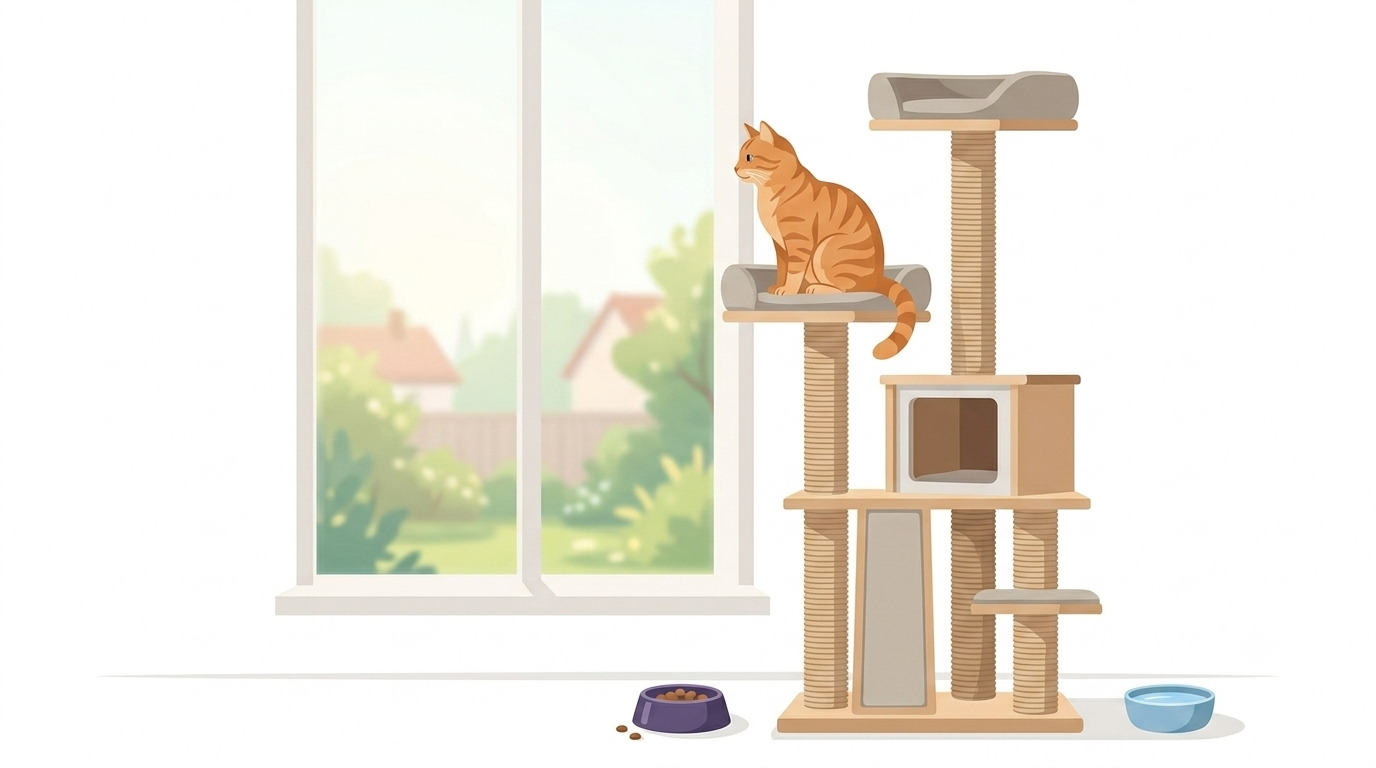
Cats feel safe up high: from there they control their surroundings and spot any change before it affects them. A tall scratching tree, an accessible shelf or simply a spot by the window is usually enough. It doesn’t take a big investment — it does take that elevated space existing and being available.
2. Scratching (in the right place)
Scratching isn’t a whim or a bad habit: it’s territorial marking and claw maintenance, a behaviour as necessary as eating or sleeping. If there’s no accessible scratching post at home, the sofa becomes the logical alternative from the cat’s point of view. To work, the scratching post needs to be stable, vertical and tall enough for the cat to stretch out fully while using it.
3. Daily hunting play
Even without real prey, cats need to simulate the hunting sequence: stalk, chase, catch. Automatic toys or feeding puzzles are a good complement, but they don’t replace play with human interaction.
4. Retreat and hiding spaces
A cat needs to be able to withdraw when they want to: a box, a bed in a quiet corner, a gap under the bed they can reach without obstacles. If a cat is always exposed, with no chance to retreat when they need it, they build up stress even if the rest of the environment seems comfortable and pleasant.
5. Enough resources, well distributed
Food and water bowls should be kept apart, because cats tend to avoid drinking near where they eat, by instinct. If there’s more than one cat at home, each one needs their own resources — litter box, food, resting area — spread across different areas of the home. Sharing them creates an invisible tension that many owners don’t notice until a behaviour or health problem appears.
What a sedentary life does to a cat’s body
Environmental needs aren’t just a matter of emotional wellbeing: they have a very concrete physical counterpart in the health of an indoor cat.
- Obesity. A cat that eats freely and barely plays tends to gain weight easily. Feline obesity is directly linked to diabetes, joint problems and liver disease.
- Urinary problems. Chronic stress and a sedentary lifestyle are linked to feline idiopathic cystitis, one of the most frequent consultations we see in indoor cats.
- Feline diabetes. It’s more prevalent in neutered, indoor, overweight cats — a combination that’s very common precisely in the urban cat.
- Dental problems. Without access to prey or natural objects to gnaw on, dental plaque builds up faster than many owners expect.
Signs your indoor cat may be stressed or bored
If any of these signs has already turned into aggression or peeing outside the litter box, we have a dedicated guide to cat behaviour problems.
| Sign | What it may indicate |
|---|---|
| Excessive licking of one area to the point of bald patches | Chronic stress or a skin problem — needs veterinary assessment |
| Eating anxiously or compulsively | Boredom, stress or a metabolic problem |
| Urinating outside the litter box | Stress, a urinary problem or an unsuitable litter box — never ignore |
| Apathy, not playing, sleeping more than usual | Could be boredom, but also illness — always rule this out with the vet |
| Sudden aggression towards people or other cats | Pain, accumulated stress or a behavioural problem |
Many of these signs overlap between environmental stress and an actual illness, and that’s exactly the trap: a change in behaviour should never be attributed to the environment alone without first ruling out a medical cause. If you want to dig deeper into how to tell a behavioural problem apart from a symptom of illness, we explain it in detail in our article on signs your cat is sick.
An indoor cat needs the vet too (more often than you’d think)
The most common conditions in indoor cats — kidney disease, dental disease, diabetes, hyperthyroidism — are silent by nature. They’re detected through periodic bloodwork and check-ups, not by waiting for obvious symptoms to appear. An indoor cat that “is never sick” can have a chronic condition running for months without anything showing from the outside.
At Rovira Veterinary Clinic, feline consultations are designed specifically for the indoor cat: low-stress handling at every visit, a calm and unhurried examination, with Dr Lídia Adell, who has specific training in feline medicine, leading every consultation. Recognising that a change in behaviour isn’t just about boredom — or, the other way round, that it is and there’s no need to worry — takes real experience with the species.
If you notice any of the signs described above, or simply want to make sure your indoor cat has everything they need, our feline medicine service can help you assess it.
Frequently asked questions
How many litter boxes do I need if I have two cats?
The general rule is one litter box per cat plus one extra. So with two cats you should have at least three litter boxes, well distributed around the space rather than clustered in one corner.
Is it better to feed an indoor cat dry or wet food?
Indoor cats tend to drink little water, which favours urinary problems. Wet food helps maintain hydration. For a recommendation tailored to your cat’s age, weight and health status, check our nutrition service.
Does my indoor cat need vaccinating the same as one with outdoor access?
Yes. Some diseases can be brought into the home on clothing or shoes, and the preventive schedule is just as important as for a cat with outdoor access. Cats have their own vaccination protocol, different from dogs — you can see how it works in our guide to cat vaccinations in Barcelona.
Is it okay to let my cat out onto the balcony?
Yes, with supervision and the right protection, such as a balcony safety net. Controlled outdoor access enriches their environment without the risks of the street.
A bored indoor cat isn’t a calm cat: it’s a cat missing something. The good news is that meeting their basic needs — height, scratching, play, hiding spots and well-distributed resources — doesn’t require renovating your home, just understanding what they actually need.
If you have any questions about your indoor cat’s behaviour or health, at Rovira Veterinary Clinic we can help you assess it. Check our feline medicine service or get in touch with us to book an appointment.
Sources
Do you have any questions about your pet?
Book an appointment