
 685 738 325
Surgery
Spaying and neutering dogs and cats: when to do it and how recovery works
14 July 2026 · Updated on 24 August 2026

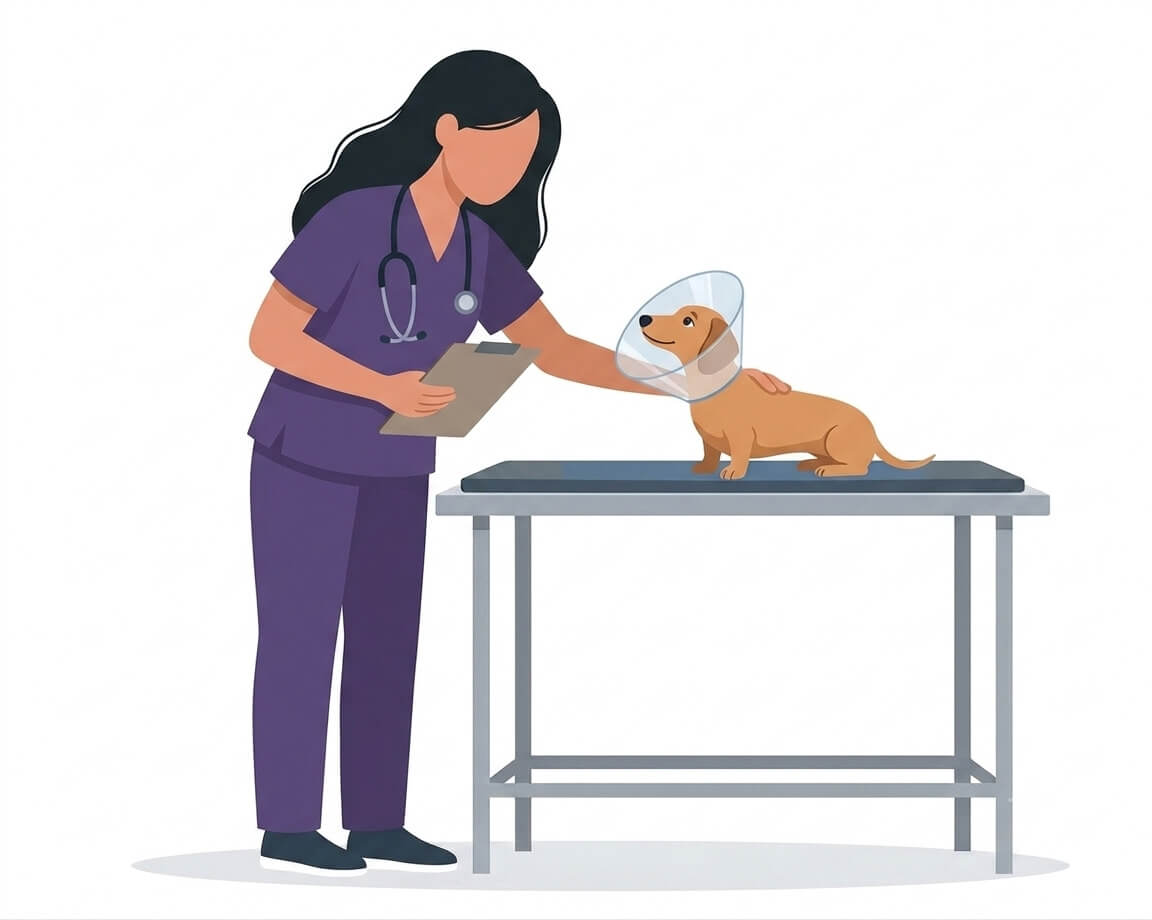
If you have a puppy or a kitten and your vet has brought up spaying or neutering, it’s normal to have questions: when’s the right time? will it hurt? is it a risky surgery? These are fair questions, and you deserve clear answers before making a decision.
The good news is that spaying and neutering are among the most common, most studied and safest surgical procedures in all of veterinary medicine. Thousands of these procedures are performed every year with a very low complication rate, and the recovery at home — when managed well — is usually straightforward.
In this guide we explain the difference between spaying/neutering and sterilisation in the strict sense, what the real health and behavioural benefits are, the recommended age, and above all, how to care for your pet in the days after surgery so recovery is as fast and comfortable as possible.
Spaying/neutering vs. sterilisation: is it the same thing?
Strictly speaking, no. Sterilisation refers to any procedure that removes an animal’s ability to reproduce without necessarily altering their hormone production — for example, a tubal ligation in females or a vasectomy in males. Spaying and neutering, on the other hand, involve the surgical removal of the reproductive organs: the ovaries and, usually, the uterus in females (ovariohysterectomy, or spaying), and the testicles in males (orchiectomy, or neutering).
The reason spaying/neutering is preferred over a hormone-sparing sterilisation is straightforward: most of the health benefits — fewer mammary tumours, no risk of pyometra, no testicular cancer — depend specifically on removing hormone production, not just fertility.
Benefits of spaying or neutering your dog or cat
Health benefits
In females, spaying significantly reduces the risk of:
- Mammary tumours, especially if performed before the second or third heat cycle
- Pyometra, a serious and potentially fatal uterine infection that affects a significant proportion of unspayed females past a certain age
- Ovarian and uterine cancer, since the organs where they originate are removed directly
In males, the health benefits include:
- Lower risk of prostate problems, including benign prostatic hyperplasia
- Elimination of the risk of testicular cancer
- Lower incidence of perianal hernias
Behavioural benefits
Beyond physical health, spaying and neutering usually bring noticeable behavioural changes, driven by the drop in hormone levels:
- In males: less territorial urine marking, a lower tendency to roam in search of females in heat, and in many cases a reduction in territorial or hormone-driven aggression.
- In females: heat cycles disappear entirely — along with everything that comes with them: bleeding, persistent and insistent yowling in cats, mood swings, and males showing up around the house.
What age is recommended?
There’s no universal age that fits every case: it depends on the species, breed, size and the vet’s individual assessment. As a general guide:
- For most dogs and cats, it’s usually recommended between 6 and 12 months of age, ideally before hormone-driven behaviours become established or, in small-breed females, before the first heat.
- In large and giant breeds, many vets prefer to wait a bit longer to allow the animal to complete bone and joint development before surgery.
- In female cats, spaying before the first heat cycle notably reduces the future risk of mammary tumours.
In any case, the right age for your specific pet should be assessed by your vet, taking into account their breed, individual development and general health.
Age and recovery: a rough guide
| Rough age | Main consideration | Basic recovery | |
|---|---|---|---|
| Dogs and cats, general case | 6–12 months | Before hormonal behaviours become established | 10–14 days |
| Small-breed females | 6–12 months | Ideally before the first season | 10–14 days |
| Large and giant breeds | Later | Wait for skeletal and joint development to complete | 10–14 days |
| Female cats | Before the first season | Markedly reduces the future risk of mammary tumours | 10–14 days |
The optimal age for your own pet is assessed by the vet based on breed, individual development and general health.
What happens on the day of surgery
Before the procedure, a pre-surgical check-up is carried out: weight, age and general health are assessed, and heart, respiratory, liver or kidney issues that could complicate anaesthesia are usually ruled out. This assessment is what allows the team to confirm your pet is in optimal condition for surgery.
It’s worth knowing that complexity isn’t the same for both sexes:
- In females, it’s abdominal surgery — the abdominal cavity is accessed to remove the ovaries (and, depending on the technique, the uterus) — so it’s somewhat more complex and recovery tends to take a bit longer.
- In males, the procedure is less invasive, and recovery is generally quicker.
Your pet will go home the same day with specific instructions for the recovery period, tailored to their case.
Post-surgery care: the first 10-14 days
The days after surgery are really the part that’s in your hands, and they largely determine whether healing goes smoothly.
What to do
- Rest and restricted activity: no jumping, running or intense play for around 10-14 days. Short, calm leash walks for dogs.
- E-collar or a post-surgical body suit: this stops your pet from licking or biting the wound, one of the most common causes of complications and infection.
- Check the wound daily: mild swelling in the first few days is normal. What isn’t normal is pus, a bad smell, or swelling that keeps getting worse.
- No bathing until the wound has fully healed.
- Stitch removal, if non-dissolvable sutures were used, at the scheduled post-op check-up.
- Stick to their usual diet: don’t change it or give human food leftovers during recovery. Appetite usually returns gradually within the first 24 hours.
Warning signs that mean you should call the vet
Contact your vet without waiting if you notice:
- Prolonged lethargy, beyond the first few hours after anaesthesia
- Loss of appetite for more than 48 hours in dogs
- Excessive swelling or redness around the wound
- Continuous bleeding or pus discharge
These same warning signs — unusual lethargy, changes in appetite, obvious discomfort — are also worth learning to recognise day to day, not just after surgery. If you have a cat at home, we cover this in more detail in our guide on signs your cat is sick.
Differences between cat and dog recovery
Even though the underlying process is the same, post-op care in cats usually requires more attention than in dogs, for one specific reason: a cat’s natural activity level. Jumping onto a shelf, climbing furniture or making a sudden move getting down from somewhere high are instinctive gestures a cat repeats without thinking — and they can delay wound healing or even cause stitches to open.
That’s why extra precautions are worth taking with cats in the first few days:
- Limit access to high places (shelves, counters, elevated windows)
- Set up a calm, contained space where they don’t need to jump to reach food, water or the litter box
- Keep a close eye to make sure they don’t manage to remove the e-collar or body suit — cats tend to be craftier at this than dogs
If your cat lives indoors, you might also find our guide on indoor cat needs and care useful for setting up a suitable recovery environment. And if you’d like to know more about feline health follow-up at our clinic, take a look at our feline medicine services.
Frequently asked questions
Will spaying or neutering make my pet gain weight?
The surgery itself doesn’t cause weight gain. The hormonal change can slightly lower basal metabolism and increase appetite a bit, so if food portions and exercise aren’t adjusted, it’s easier to put on weight. With a diet suited to their new needs and regular activity, weight is perfectly manageable. It’s not an inevitable side effect, it’s something you manage through habits.
Does it change my dog’s or cat’s personality?
It doesn’t change their underlying personality — they’ll still be just as playful, affectionate or independent as before. What usually does decrease are behaviours tied to reproductive hormones: marking, roaming tendencies, some territorial aggression in males, or heat cycles and their effects in females. Most owners notice a calmer pet in that specific sense, not a different animal.
Is it a safe procedure?
Yes. It’s one of the most common surgical procedures in veterinary medicine, with a huge amount of accumulated experience. Like any surgery under general anaesthesia, it carries some risk, which is why a health assessment is always done beforehand. But the safety profile of this specific procedure is very high when it’s performed with proper preparation.
How long does full recovery take?
The stricter care phase — rest, activity restriction, wound monitoring — lasts around 10 to 14 days. After that, and following the post-op check-up, most animals return to completely normal activity. In females, since it’s abdominal surgery, the process can be a bit slower than in males.
Spaying or neutering is an important decision, and it’s normal to want every question answered before taking the step. If you’re wondering whether it’s the right time for your dog or cat, or you’d like us to assess their specific case before scheduling surgery, the team at Rovira Veterinary Clinic is here to guide you through the whole process. Check out our surgery services or get in touch with us to have your questions answered and book an assessment.
And if you’d like to know how often your pet should see the vet beyond this one-off procedure, don’t miss our guide on how often your pet should visit the vet.
Sources
Do you have any questions about your pet?
Book an appointment