
 685 738 325

Preventive Medicine
Blood tests for dogs and cats: what they detect and when to do them
5 October 2026

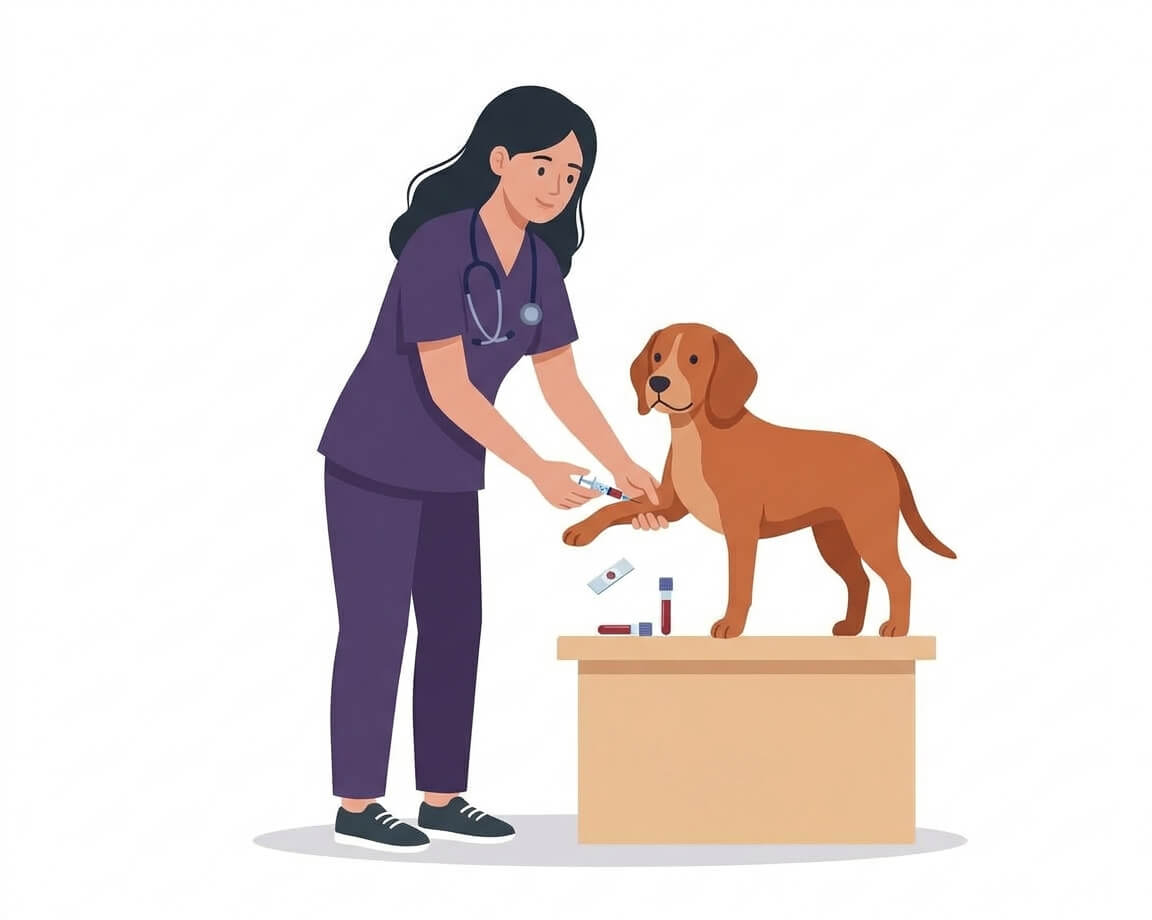
It’s probably the test we request most often in the consulting room, and also one that raises the most questions: what exactly are we looking at in a blood test? Why recommend it if the animal seems fine? Does it need fasting? Is a blood test from two months ago good enough for surgery?
The short answer is that a blood test lets us see what can’t be seen or felt: how the liver, kidneys, immune system and glucose metabolism are working. And many of the most common diseases in dogs and cats — especially from middle age onwards — change the blood long before they cause symptoms.
In this article we explain what a blood test includes, what it can and can’t detect, when it’s worth doing and how we do it at our clinic in Gràcia.
What a blood test includes: blood count and biochemistry
When we talk about “a full blood test” we almost always mean two tests run from the same sample.
The complete blood count: the cells in the blood
The complete blood count (CBC, or haematology) counts and describes the cells circulating in the blood:
- Red blood cells (haematocrit, haemoglobin). Low values mean anaemia, which can be caused by bleeding, chronic disease (kidney disease is a classic cause in cats), parasites or bone marrow problems. High values most often mean dehydration.
- White blood cells. These rise with infection and inflammation, and the differential (which type of white cell is increased) points towards the cause. They can also change with stress, steroids or, less often, bone marrow disease.
- Platelets. These are involved in clotting. A low count can appear with tick-borne infections, immune-mediated disease or, in leishmaniasis, as part of a wider picture.
Biochemistry: how the organs are working
Biochemistry measures substances dissolved in the serum that reflect how each organ is working:
| Parameter | What it tells us |
|---|---|
| Urea, creatinine | Kidney function. |
| ALT, alkaline phosphatase, bilirubin | Damage or strain on the liver and bile ducts. |
| Glucose | Diabetes (persistently high) or hypoglycaemia. |
| Total protein, albumin, globulins | Nutritional status, protein loss through the kidneys or gut, chronic inflammation and systemic infections. |
| Cholesterol and triglycerides | Metabolic and hormonal disorders. |
| Electrolytes (sodium, potassium, chloride), calcium, phosphorus | Hydration, kidney function, internal balance and metabolic disorders. |
Tests added depending on the case
The general profile can be extended with specific tests when age, species or symptoms call for it:
- Total T4 for hyperthyroidism, very common in cats over 8-10 years old.
- Fructosamine to confirm diabetes or monitor its control.
- SDMA, a kidney function marker that rises earlier than creatinine and helps detect chronic kidney disease at an early stage.
- Infectious disease tests, such as FIV/FeLV (feline immunodeficiency and leukaemia viruses) in cats, leishmania in dogs or tick-borne diseases, depending on the species, lifestyle and symptoms.
- Cortisol when we suspect Cushing’s or Addison’s disease.
And we almost always recommend pairing it with a urine test: urine concentration is one of the first things to change when the kidneys start to struggle, sometimes before the blood does.
What a blood test doesn’t detect
It’s just as important to know the limits of the test, so we don’t ask it for something it can’t give:
- It doesn’t show the structure of organs. A small splenic tumour, a bladder stone or a foreign body in the gut can all coexist with normal blood results. That’s what ultrasound and X-rays are for.
- A normal result doesn’t rule everything out. The liver and kidneys have a lot of reserve: they can lose part of their function before values move out of range.
- A value slightly out of range isn’t always disease. Reference ranges are based on 95% of healthy animals, so some healthy animals will, by definition, sit just outside them. What matters is the overall picture, the clinical context and, above all, the trend between tests.
When to do a blood test on your dog or cat
At check-ups, even when healthy
- Adults (1-7 years): one blood test a year at the annual check-up is a good benchmark, especially if they’ve never had one.
- Seniors (from 7-8 years): every six months, together with urine and blood pressure. This is the stage when kidney disease, hyperthyroidism, diabetes and liver disease appear, and when catching them early changes the outlook. We go into more detail in our guide to how often to take your pet to the vet.
Cats deserve a special mention: they’re experts at hiding discomfort, and one that “seems perfectly fine” may have had kidney disease developing for months. In feline medicine regular blood tests are the main preventive tool.
Before an anaesthetic
Before an anaesthetic — a spay or neuter, a dental clean, any surgery — pre-anaesthetic bloods tell us whether the liver and kidneys will metabolise and clear the drugs properly, and whether there’s anaemia or a clotting problem. With that information we adjust the protocol or, if needed, postpone the procedure.
How long is a blood test valid for surgery? There’s no universal rule. As a guide, for a young, healthy animal whose condition hasn’t changed, results from a few weeks earlier are usually enough. For older animals, those with a known illness or with new symptoms, we prefer results from the days before. If you already have recent results, even from another clinic, bring them and we’ll assess whether they need repeating.
When something isn’t right
When there are symptoms without an obvious cause — eating less or drinking more, weight loss, lethargy, frequent vomiting — a blood test is almost always the first step. You can go through the signs that a cat is unwell that most often lead us to request one.
Monitoring chronic disease and treatment
Animals with kidney disease, diabetes, hyperthyroidism, leishmaniasis or on long-term medication (anti-inflammatories, thyroid or epilepsy drugs) need regular follow-up blood tests to adjust doses and detect side effects. We set the frequency case by case.
How to prepare: fasting and other questions
- Fast for 6-8 hours before the sample is taken. A sample taken just after a meal comes out milky (lipaemic) and affects several values. Don’t withhold water.
- If your pet is diabetic or on medication, ask us first: they may need to eat or take their tablet at the usual time.
- If it’s a cat, get the carrier ready in advance; our guide to stress-free vet visits for cats has tips that work. Stress isn’t just unpleasant: in cats it can temporarily raise blood glucose and skew the result.
How we do blood tests at Rovira
Blood tests are part of our clinical analysis service, together with urine tests, cytology and specific tests.
- Clinical assessment first. Before taking blood we talk to you and examine your pet to decide which tests make sense. A blood test without context is harder to interpret and sometimes misses what really matters.
- A quote before the sample. We explain what we propose to test, why, and how much it costs, so you can decide with all the information.
- Low-stress sampling. It’s quick and in the vast majority of cases needs no sedation. With cats we use low-stress handling, without rushing and at their pace.
- Processing in the clinic or at an external laboratory. We run most basic tests in the clinic and you get the results the same day. More specific tests are sent to an external laboratory and take 24 to 48 hours.
- Interpretation and explanation. We don’t just send you a PDF full of asterisks: we explain what each relevant value means, what’s normal for your pet and what isn’t.
- An action plan. If everything is fine, we keep the values as a reference for the future. If something is abnormal, we propose the next step: repeating in a few weeks, adding a urine test or diagnostic imaging, or starting treatment.
Frequently asked questions
How much does a blood test for a dog or cat cost?
It depends on what is tested: a blood count alone doesn’t cost the same as a full profile with biochemistry, or an extended profile with thyroid, SDMA, infectious disease tests or urine. Before the sample is taken we explain which tests we recommend and why, and give you a fixed quote so you can decide with all the information.
How long do the results take?
Most basic tests, such as the blood count and biochemistry, are run in the clinic and you get the results the same day. More specific tests are sent to an external laboratory and take 24 to 48 hours; cultures take 3 to 7 days.
Can I book just a blood test, without a consultation?
We always do a brief assessment before taking blood, even if your pet is healthy and only coming in for the test. It’s what lets us choose the right tests and interpret the results properly afterwards.
When to book
- Your dog or cat is over 7 and hasn’t had a blood test in the last year.
- They’re due to have an anaesthetic soon.
- They’re drinking or urinating more than usual, have lost weight or are eating less, even if they seem fine.
- They’re on long-term treatment and a check is due.
- They’ve never had a blood test and you’d like their baseline values while healthy.
If you’d like a blood test for your dog or cat in Barcelona, book an appointment at our clinic in Gràcia. We’ll explain which tests make sense for them, what they cost and what we’ll do with the results.
Sources
Do you have any questions about your pet?
Book an appointment